Precision Cleaning Solutions for Rubber Production Equipment
Rubber manufacturing facilities encounter ongoing challenges in keeping equipment clean and efficient. Extruders, molds, presses, rollers, and calenders regularly accumulate rubber residues, release agents, dust, and chemical build-up. These contaminants can compromise product quality, hinder production speeds, increase equipment wear, and extend downtime. Clean machinery ensures consistent rubber products, streamlined operations, and prolonged equipment lifespan.
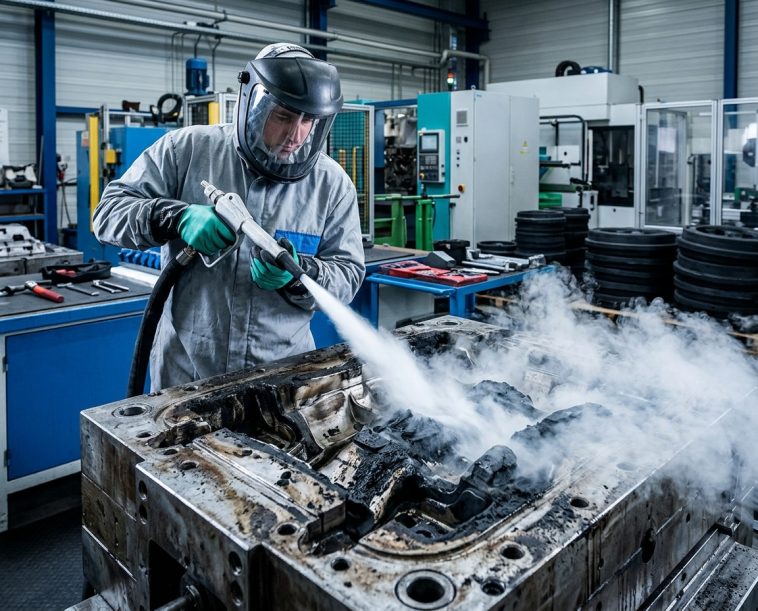
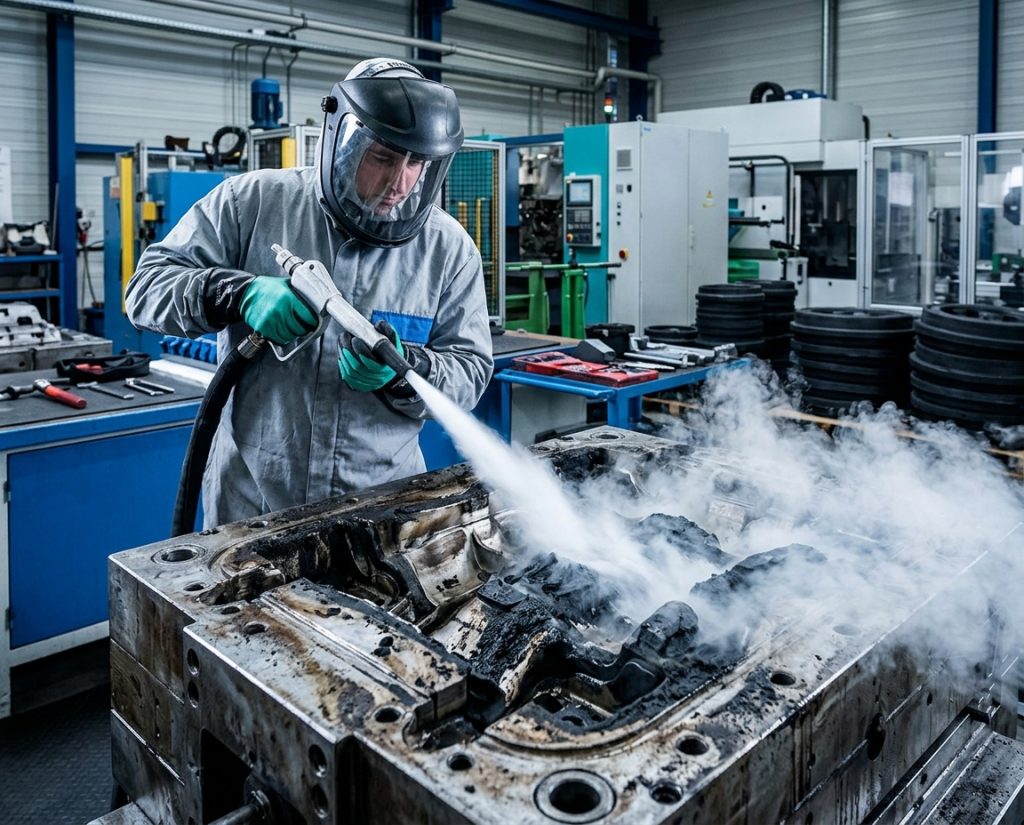
Dry ice blasting stands out as a superior cleaning method for rubber manufacturing. It propels high-velocity solid CO₂ pellets using compressed air to remove residues without causing abrasion, introducing moisture, or leaving chemical traces. Unlike conventional approaches like scraping, solvent use, or sandblasting, this technique generates no secondary waste, making it perfect for molds, extrusion systems, and precision components.
Why Rubber Manufacturers Choose Dry Ice Blasting
Rubber production involves elevated temperatures, adhesive materials, and intricate molds. Build-up from release agents, uncured rubber, and additives clings to molds, rollers, and machinery, potentially degrading finished product quality. Traditional methods demand manual labor, chemicals, or disassembly, which are labor-intensive and risk surface damage.
Dry ice blasting delivers rapid, non-abrasive, chemical-free results, enabling in-place cleaning that safeguards surfaces and cuts production interruptions.
Non-Abrasive Protection for Precision Components
Sensitive equipment like molds, rollers, and presses in rubber manufacturing requires gentle handling. Abrasive techniques can cause scratches, warping, or degradation, leading to defects and costly repairs.
Dry ice blasting dislodges contaminants without surface harm, preserving extruders, calenders, and rollers for sustained performance and superior output.
Chemical-Free and Eco-Friendly Process
Solvents common in rubber cleaning pose environmental risks and safety concerns, especially under stringent regulations.
This method eliminates chemicals, ensuring non-toxic operations that minimize worker exposure and hazardous waste.
No Residue Left Behind
In contrast to sand or bead blasting, dry ice pellets sublimate on impact, leaving only dislodged debris for simple disposal. This streamlines post-cleaning efforts, avoids production area contamination, and lowers costs.
In-Place Cleaning Minimizes Downtime
Disassembling heavy rubber molds and machinery is expensive and disruptive. Dry ice blasting cleans on-site, supporting frequent maintenance without halting lines.
Key Applications in Rubber Manufacturing
Dry ice blasting excels across diverse rubber processes, from molding to material handling.
Efficient Mold Cleaning
Molds build up release agents, uncured rubber, and additives, impacting part precision and longevity. This cleaning removes residues non-abrasively, upholding mold accuracy.
Extruder and Calender Upkeep
Rollers, die plates, and surfaces on extruders and calenders collect rubber, dust, and chemicals. Dry ice blasting restores them swiftly, boosting consistency and curbing defects.
Press Contaminant Removal
Hydraulic and mechanical presses gather residues affecting efficiency. Quick, safe cleaning maintains optimal operation.
Conveyor System Maintenance
Belts, chutes, and conveyors trap debris, disrupting flow. Non-disruptive cleaning keeps operations fluid.
Routine Preventive Schedules
Regular sessions on molds, presses, and conveyors prevent build-up, averting failures and quality issues.
Common Contaminants Effectively Removed
Rubber processes produce residues like uncured rubber, release agents, mold lubricants, dust, carbonized particles, adhesives, curing remnants, coatings, oils, and grease. Targeted cleaning enhances consistency, cuts downtime, and extends asset life.
How Dry Ice Blasting Operates
Compressed air accelerates solid CO₂ pellets at contaminants via three core mechanisms.
Kinetic Energy Delivery
Pellets impact surfaces at high speed, loosening residues without abrasion on molds or rollers.
Thermal Shock Effect
Extreme cold contracts contaminants, breaking bonds for effortless removal.
Sublimation Expansion
Pellets turn to gas instantly, expanding to lift debris with zero media residue.
Core Advantages for Rubber Facilities
Key benefits include non-abrasive action protecting molds and rollers, chemical-free safety, residue-free results, in-place efficiency reducing downtime, preventive maintenance support, and improved product quality with fewer defects. Integrating this into routines optimizes efficiency, cuts waste, and ensures reliability.
Rubber Industry Segments Benefiting Most
Industrial use of dry ice blasting in surface cleaning applications span automotive tires, industrial products, molded/extruded parts, conveyor belts, sheets, seals, gaskets, and O-rings, with tailored solutions for unique challenges.
Enhancing Preventive Maintenance Programs
Preventive strategies prevent failures and interruptions by clearing residues early, avoiding chemicals or disassembly, and safeguarding equipment for reliability.
Safety and Environmental Advantages
This dry process skips solvents to prevent corrosion or contamination, uses eco-friendly CO₂ that fully sublimates, and simplifies compliance while protecting workers and sites.
Frequently Asked Questions
What is dry ice blasting?
Dry ice blasting propels solid CO₂ pellets with compressed air to clean surfaces through kinetic impact, thermal shock, and sublimation, leaving no residue.
Why is dry ice blasting ideal for rubber manufacturing equipment?
It provides non-abrasive, chemical-free, in-place cleaning for molds, extruders, presses, and rollers, reducing downtime, protecting precision parts, and improving product quality.
How does dry ice blasting compare to traditional methods like sandblasting?
Unlike abrasive or chemical alternatives, it avoids surface damage, secondary waste, moisture, and hazards, enabling faster, greener maintenance.
Meta Description: Discover dry ice blasting for rubber manufacturing: non-abrasive, chemical-free cleaning for molds, extruders, presses, rollers, and calenders. Reduce downtime, boost efficiency, and ensure high-quality production with precision residue removal.