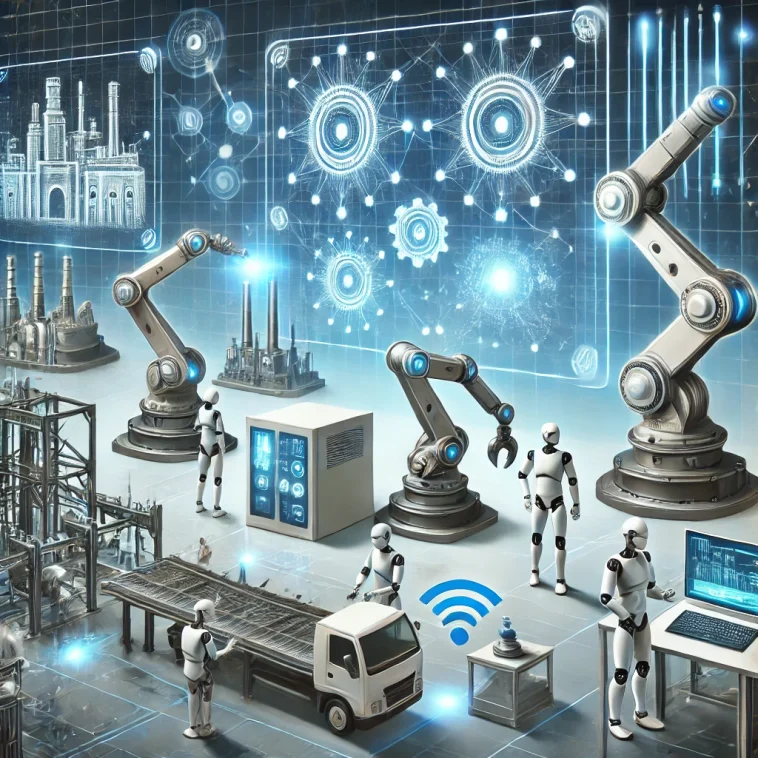

AI and the Manufacturing Landscape: A New Era of Innovation
The manufacturing industry is experiencing a transformative period, as artificial intelligence (AI) shifts from being a futuristic concept to a real-world force that is reshaping operations. With the evolution of sophisticated AI tools, manufacturers are rethinking traditional processes and finding fresh ways to harness technology. This editorial explores the current state of AI integration in manufacturing, examining both the promising opportunities and the tricky parts that companies need to manage along the road ahead.
In many ways, AI is escaping its high-tech niche and proving its worth in environments that historically relied on manual oversight and rugged machinery. Large-scale production facilities are now employing intelligent systems to enhance workflow efficiencies and to deliver insights that can lead to process optimization. As more companies work through integrating AI, it is essential to recognize the small twists and turns associated with this shift.
AI-Driven Transformation: Opportunities and Financial Commitments
Recent studies, such as the 3DS Technology Barometer, reveal that manufacturing leaders are increasingly viewing AI not as an overwhelming technical hurdle, but as a gateway to modernizing operations and unlocking new competitive advantages. Executives in the manufacturing sector—particularly those from mid-sized companies with revenues between $10 million and $100 million—are displaying a strong enthusiasm for AI-powered solutions. Their optimism is reflected in surveys where approximately 50% of industry leaders hold a favorable view of AI’s potential.
In particular, many mid-sized firms—with about 59% expressing interest in innovative AI applications and 60% excited about its application—are setting the stage for what might be one of the most significant shifts in industrial practices in decades. This isn’t just a trend; it is a long-needed evolution toward streamlining complex production flows and reducing the little details that often bog down traditional manufacturing processes.
Financial investments in AI reveal yet another layer of transition. Nearly two-thirds of manufacturers plan to allocate over 10% of their technology budgets to AI-driven systems in the coming year. The data is especially encouraging among industrial equipment manufacturers, 77% of whom indicate a commitment to investing in AI. This financial backing not only underscores AI’s growing promise but also highlights the fact that smaller manufacturers might have an edge over larger ones. In many cases, big manufacturers—those earning more than $100 million annually—tend to be more cautious, indicating that agility and nimbleness are often found in mid-sized companies.
Understanding AI’s Financial Impact Through Data
An analysis of expenditure patterns shows that financial commitment toward AI is not uniformly seen across the board:
- Mid-sized Manufacturers: Leaning toward higher investment, focusing on quicker returns from modernized processes.
- Large Manufacturers: Often taking a conservative approach, potentially due to legacy systems and deeper organizational structures that can slow down innovation.
This bifurcation in investment strategy underscores a critical theme: the financial hurdles and opportunities that AI integration brings differ depending on a company’s size and operational agility. For many leaders, it becomes essential to pore over every fine detail and to balance potential benefits with the immediate, sometimes intimidating, monetary commitments.
Key Areas Where AI is Changing the Manufacturing Game
The potential applications of AI within manufacturing extend well beyond automation of simple tasks. AI-driven tools are infusing intelligence into several core aspects of operations—from supply chain management to workforce enablement. As manufacturers start to get into AI-focused applications, they are discovering that the benefits extend to many key areas. Here, we take a closer look at some of the most promising domains where AI is making a tangible impact.
Warehouse and Distribution Optimization
AI applications in warehouse and distribution not only streamline logistics but also transform the way inventory is managed. Approximately 62% of manufacturers recognize warehouse and distribution as areas primed for AI upgrades. Here are some specific benefits:
- Improved Layout Designs: By leveraging predictive analytics, manufacturers can reconfigure warehouse spaces to boost overall efficiency.
- Accurate Inventory Management: AI helps monitor stock levels in real-time, reducing the risk of overstock or stockouts.
- Optimized Logistics: Intelligent routing decisions ensure faster turnaround and more cost-effective transportation of goods.
Table 1 below summarizes these benefits:
| Key Benefit | Description |
|---|---|
| Layout Redesign | Utilizing AI insights to create more efficient warehouse layouts |
| Inventory Accuracy | Real-time tracking of inventory levels to reduce errors |
| Logistics Optimization | Enhancing transportation and distribution routes for cost savings |
Refining Procurement and Purchasing Processes
Procurement is another realm where AI is rapidly gaining traction. More than half of manufacturers acknowledge that AI can tackle the tangled issues present in traditional procurement practices. Through advanced data analytics and supplier tracking, AI enhances:
- Supplier Assessment: By automating and deepening supplier evaluations, AI provides clearer insights into performance metrics.
- Cost Savings: AI-driven cost-analysis tools uncover hidden savings by identifying cost-effective suppliers and alternatives.
- Risk Management: Predictive risk assessment tools help manage the risks inherent in complex supply chains.
Manufacturers are steadily taking steps to integrate AI into their procurement workflows, transforming what was once a nerve-racking process into one that is more streamlined and efficient.
Enhancing Performance Management
Improving operational performance is a top priority in manufacturing. Performance management systems enriched with AI can provide critical insights that help boost productivity. Some of the key improvements include:
- Productivity Analysis: AI tools track productivity trends and identify areas where improvements can be made.
- Energy Usage Optimization: By monitoring energy consumption, AI systems can highlight wasteful practices and suggest optimizations.
- Quality Control: Detailed monitoring of production processes helps ensure consistent product quality and reduces defects.
These AI-driven solutions turn what might have been intimidating performance reviews into more transparent and manageable processes, allowing managers to utilize data-driven decisions to foster continuous improvement.
Streamlining Production Techniques
AI is also making significant inroads into core production activities. Around 50% of manufacturers consider production processes a prime target for AI enhancements. Modern production workflows benefit from AI in several ways:
- Process Monitoring: Automated systems can continuously monitor production lines for anomalies and inefficiencies.
- Equipment Tracking: With AI, maintenance schedules can be optimized through predictive maintenance offerings.
- Quality Assurance: Real-time feedback on quality parameters helps reduce waste and improve overall product standards.
By integrating sensors and smart feedback loops, AI transforms production floors into dynamic environments where the fine points of operations are measured and optimized continually.
Empowering the Workforce Through AI
Perhaps one of the most transformative aspects of AI in manufacturing is its impact on workforce enablement. While some may worry that AI might replace human workers, the technology is instead serving as a tool to enhance productivity and support employees. With around 47% of manufacturers exploring workforce-focused AI applications, the benefits include:
- Optimized Workforce Allocation: AI helps in assigning tasks based on employee strengths and real-time workload data.
- Enhanced Decision Making: Employees are equipped with immediate data insights, allowing for quicker and more informed decisions.
- Training and Development: AI-driven platforms are used to tailor learning and development programs to specific staff needs.
The subtle parts of AI in workforce management allow employees to work smarter, not harder, turning what might have been seen as a nerve-racking threat into a key tool for daily operations.
Overcoming the Tricky Parts: Challenges in AI Adoption
Despite the growing excitement and clear benefits, manufacturers encounter several tricky parts when implementing AI. These challenges can be grouped into a few primary areas that require careful consideration and proactive management.
One of the major issues is the intimidating nature of high upfront costs. For 44% of manufacturers, complex equipment investments remain a significant sticking point. While the long-term benefits of enhanced efficiency and reduced downtime are clear, the initial financial outlay can be a real stumbling block.
Another core challenge involves data quality. AI systems rely on extensive, accurate data to function effectively. However, 40% of manufacturers report that their current data infrastructure is riddled with issues. Without reliable data, even the most advanced AI tools can falter, producing results that are less than optimal.
A third challenge resides within the culture of many manufacturing companies. Resistance to change is a frequent stumbling block, with 38% citing this as a major barrier. Employees and managers alike need to get around the maze of outdated procedures and to become comfortable with new processes and technology—a shift that demands not only technical adjustments but also significant cultural and operational change.
Addressing Budget Constraints and Financial Hurdles
The financial risks and up-front investments associated with AI can often appear overwhelming. Manufacturers need to steer through the various twists and turns of budgeting for advanced technology. Here are several strategies to consider:
- Phased Implementation: Instead of a full-scale overhaul, companies can adopt a step-by-step approach, gradually integrating AI in manageable increments.
- ROI Analysis: Conduct thorough return-on-investment evaluations to understand how AI implementation can eventually lead to cost savings and efficiency gains.
- Government and Private Grants: Explore available grants and financing initiatives that support technological modernization in manufacturing.
By tackling financial challenges head-on, companies can mitigate the initial nervousness associated with budget allocation, turning the intimidating upfront costs into a well-planned financial strategy.
Improving Data Quality and Establishing Reliable Systems
Data is the lifeblood of any AI project. Without reliable data, the effectiveness of AI in manufacturing is severely limited. To manage the confusing bits of data quality issues, manufacturers can:
- Invest in Robust Data Collection: Upgrade sensors, databases, and systems that support more accurate and timely data capture.
- Implement Rigorous Data Management Practices: Develop best practices for storing, cleaning, and analyzing data.
- Leverage Cloud Computing: Utilize cloud-based tools to centralize data and facilitate easier integration of AI applications across different parts of operations.
Addressing these tangled issues with a clear, systematic approach allows companies to lay the groundwork for AI success. By ensuring that data is solid from the outset, manufacturers can avoid the nerve-racking scenario of dealing with poor-quality inputs that lead to subpar outputs.
Managing Organizational Change and Workforce Training
Introducing AI into the workplace is not simply a technical upgrade—it is a cultural transformation. Many organizations face resistance from employees who may feel threatened by the influx of technology. To manage these human factors and make the necessary cultural shift, companies should consider:
- Comprehensive Training Programs: Equip managers and frontline employees with the skills necessary to work alongside AI systems. Training helps ease the fear of the unknown and builds confidence in the new processes.
- Clear Communication: Articulate the benefits of AI integration early on, emphasizing that the goal is to assist and empower, rather than replace, human expertise.
- Change Management Strategies: Implement structured change management practices to help employees transition into the new, technology-augmented roles.
By taking a proactive approach to workforce enablement, manufacturers can transform what might have been an off-putting challenge into a super important opportunity for growth and development.
Case Study: Solidworks and the Integration of AI in Manufacturing
Solidworks, a leader in CAD/CAM software and manufacturing solutions, provides a powerful example of how advanced technology and AI can come together to create a more efficient, data-driven production environment. Their approach leverages the 3DExperience platform to integrate AI smoothly with existing workflows, addressing many of the little twists and turns that often complicate technological transitions.
Solidworks’ solutions are designed to be accessible, even for organizations that are sorting out the nerve-racking challenges of modernizing their production systems. By providing comprehensive tools that not only support operations but also enhance data quality and process management, Solidworks offers manufacturers a roadmap for overcoming financial, technical, and cultural hurdles.
Below is a summary of how Solidworks’ platform helps address key issues in AI adoption:
- Integrated Data Management: Combines real-time data streams with advanced analytics to offer actionable insights.
- User-Friendly Interfaces: Makes it easier for non-technical workers to engage with AI-powered tools and dashboards.
- Scalable Solutions: Provides solutions that cater both to smaller companies with agile workflows and larger manufacturers with extensive operations.
This case study underscores a simple, yet effective point: by partnering with innovative technology providers, manufacturers can take a closer look at their operations and pinpoint exactly where AI can make the most difference.
Looking Ahead: The Future Path of AI in Manufacturing
As AI continues its march into the heart of manufacturing, the road ahead is as exciting as it is challenging. The growing enthusiasm among executives is a clear signal that the industry is ready to adopt technology that was once relegated to the realms of science fiction. However, this journey is not without its nerve-racking moments. Manufacturers will need to manage financial uncertainties, navigate the tangled issues of data quality, and foster a culture that embraces change.
The key to crafting success in this evolving landscape is a balanced approach that weighs the benefits of AI-enhanced efficiency against the overheads of initial investment and organizational restructuring. Leaders must be prepared to dig into every fine detail and to sort out the various off-putting challenges that may arise during the transition.
Looking into the future, here are a few strategic recommendations for manufacturers planning to integrate AI further into their operations:
- Embrace a Phased Rollout: Instead of launching a full-scale overhaul immediately, initiate pilot projects that can serve as proof-of-concept and help iron out any complications.
- Invest in Workforce Training: Make it super important to train staff at all levels, ensuring that everyone involved is comfortable with the new technologies and can use them effectively.
- Prioritize Data Integrity: Build an infrastructure that can both store and manage data accurately, turning data quality from a potential stumbling block into a competitive advantage.
- Collaborate with Technology Partners: Work with specialists like Solidworks who understand the practical challenges of AI integration and can offer tailored solutions to help you manage your way through the transition.
Adopting this balanced strategy not only minimizes the risk of falling victim to the expensive pitfalls that can derail progress—it also paves the way for a smoother, more robust transformation tailored to each company’s unique needs.
Balancing Tradition and Innovation: A Cultural Perspective
The story of AI in manufacturing is not solely one of technology—it is also one of human adaptability. Many in the industry appreciate that while AI introduces a series of intimidating new tools, it simultaneously preserves the core values and time-tested processes that have traditionally governed manufacturing. The objective is not to discard the old in favor of the new, but rather to find a path that incorporates the best of both worlds.
Established practices, when combined with modern AI-driven insights, can lead to a more agile and responsive production environment. Employees can transition from managing routine tasks to focusing on higher-level problem-solving, evolving their roles from mere operators to strategic thinkers. It is this fusion of tradition and innovation that has the power to drive substantial growth and resilience in manufacturing.
Manufacturers are now tasked with taking a closer look at their existing workflows, identifying small distinctions between what has worked in the past and what might be improved with the infusion of modern technology. In doing so, they not only retain their operational strengths but also build in the flexibility needed to excel in an increasingly competitive global market.
Concluding Thoughts: Turning Challenges into Opportunities
In conclusion, the journey toward full-scale AI integration in manufacturing is one marked by both opportunity and a series of tricky parts that demand careful attention. From the smart redesign of warehouse layouts and procurement processes to the nuanced improvements in production and workforce management, AI offers a pathway to significantly bolster operational efficiency and drive innovation.
However, manufacturers must also be ready to face the inevitable hurdles that come with this transformative journey—whether it is managing intimidating upfront costs, addressing tangled data issues, or overcoming cultural resistance within the organization. Looking ahead, the best approach is a balanced and phased strategy that involves small trials, incremental investments, and extensive employee training.
By embracing modern AI solutions and partnering with industry experts, manufacturers can not only figure a path through these complications but can also set the stage for a more competitive and resilient future. The transformation driven by AI is not a temporary phase—it is a critical step toward evolving an industry that has long relied on tradition. The integration of smart technology offers a promising horizon where efficiency is maximized, risks are minimized, and every decision is supported by data-driven insights.
Ultimately, the future of manufacturing will hinge on finding that sweet spot between preserving the strengths of traditional methods and embracing the leaps made possible by advanced technology. Success will belong to those who are not deterred by the nerve-racking challenges but who instead see each twist and turn as an opportunity for growth, innovation, and revitalization.
In this brave new world, manufacturers stand at the crossroads of possibility. By investing in AI wisely, addressing financial constraints with careful budgeting, and ensuring that every employee feels empowered by new tools, the manufacturing sector can transform every intricate piece of its operations into a streamlined, efficient, and future-ready model. The journey ahead may be full of challenges, but it is also replete with opportunities deserving of every industry leader’s consideration.
As we take our collective steps forward, the calls for smarter production strategies, more detailed data analytics, and improved overall productivity will resonate across the global stage. The manufacturers who succeed will be those who not only get into the heart of these innovations but who also remain adaptable as their roles evolve. It is a time for bold investments, creative solutions, and, above all, a commitment to evolving practices that have long underpinned this vital sector.
In embracing AI, manufacturers are not just buying into a new technology—they are investing in the future of their operations, paving the way for increased efficiency, enhanced product quality, and a workforce empowered by smart, actionable insights. As technology and tradition continue to meld, the manufacturing industry will find ways to triumph over the tricky parts, emerge stronger, and continue setting benchmarks in innovation and operational excellence.
Originally Post From https://www.machinedesign.com/cad-cam-software/article/55303153/dassault-systemes-solidworks-the-role-of-ai-in-transforming-manufacturing-operations
Read more about this topic at
Adopting AI in manufacturing at speed and scale
AI in Manufacturing: How IT Powers the Fourth Industrial …