
Washington’s Tax Overhaul: A New Era in Estate and Capital Gains Legislation
Washington State’s recent legislative move to overhaul its estate and capital gains tax regime marks a pivotal moment not only for the state’s wealthiest residents but also for small business owners and industrial manufacturers. This new law—set to take effect in 2025—offers a mix of a seemingly welcome increase in the estate tax exemption and a series of tricky parts that create significant changes in tax liabilities, especially for those holding high net worth estates.
Legislators have long overlooked adjustments to the estate tax legislation since 2018, leaving many taxpayers in a state of uncertainty. With the new Washington Senate Bill 5813, the state government has finally taken steps to tweak the rules. However, while the tax exemption for estates is raised, the accompanying steep hikes in tax rates and the retroactive aspect of the capital gains surcharge have raised serious questions among economists, legal experts, and business leaders alike.
Understanding the New Estate Tax Law in Washington
The core components of the new law involve both the estate tax and capital gains tax. Prior to this legislation, Washington’s estate tax exemption had been stagnant at $2.193 million since 2018. Under the new rules, this exemption climbs to $3 million, with annual adjustments for inflation. On the surface, this change might appear beneficial for estate planning. However, critics argue that the additional benefits are overshadowed by the intimidating and tangled issues posed by significantly higher estate tax rates.
For estates that exceed the exemption threshold, the new tax brackets have essentially transformed the landscape. Previously capped at a maximum rate of 20% for estates over $9 million, the new legislation raises this cap to an alarming 35%. When combined with the federal estate tax obligations, large estates could face a combined effective rate of around 61%. This dramatic increase spotlights the hidden complexities in planning for wealthy families and business owners who are now required to reexamine their estate planning strategies.
Capital Gains Tax Adjustments and Their Implications
Washington’s legislative leaders did not stop at adjusting estate taxes; they also honed in on long-term capital gains. In May 2021, a capital gains tax was introduced with a base rate of 7% on net gains from the sale or exchange of significant assets. However, the new legislation introduces a two-tiered framework, applying an additional 2.9% tax on long-term capital gains exceeding $1 million—after a $270,000 exemption that is adjusted annually for inflation.
For many Washington residents, especially those engaged in investing and with diverse assets such as stocks, bonds, and business interests, these adjustments introduce nerve-racking twists and turns in tax planning routines. Although the sale of real estate and assets held in certain retirement savings vehicles remain outside the purview of this tax, the retroactive application for sales occurring on or after January 1, 2025, means that businesses and individual investors must re-strategize quickly.
Detailed Comparison: Old Versus New Estate Tax Rates
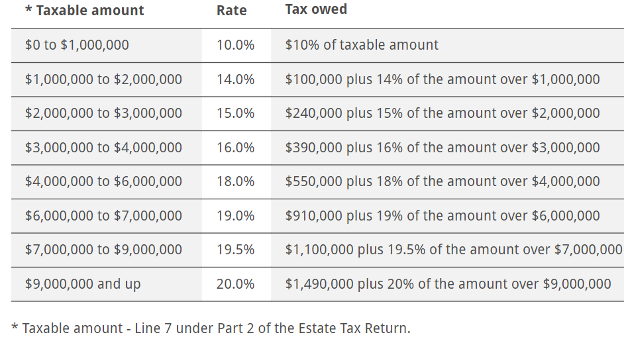
To better understand the changes imposed by the new legislation, it is useful to compare the previous estate tax rates with the new brackets. The table below summarizes the differences between the old and new tax rates for different portions of an estate exceeding the exemption threshold:
| Net Estate (amount exceeding exemption) | Prior Estate Tax Rate | New Estate Tax Rate |
|---|---|---|
| $0 – $1,000,000 | 10% | 10% |
| $1,000,001 – $2,000,000 | 14% | 15% |
| $2,000,001 – $3,000,000 | 15% | 17% |
| $3,000,001 – $4,000,000 | 16% | 19% |
| $4,000,001 – $6,000,000 | 18% | 23% |
| $6,000,001 – $7,000,000 | 19% | 26% |
| $7,000,001 – $9,000,000 | 19.5% | 30% |
| $9,000,000 and above | 20% | 35% |
This table clearly illustrates both the fine points of the new tax structure and the significant upward adjustments in tax rates as estate values climb. While the increased exemption could offer some relief, the additional tax burden, especially for estates over $9 million, poses a series of confusing bits for those engaged in estate planning.
Implications for Wealthy Families and Estate Planning Strategies
For high-net-worth families, the implications of these tax reforms are layered and complicated. Although increasing the estate tax exemption offers some hope for easier wealth transfer, the steep new tax rates for larger estates force families to reexamine how they plan for wealth succession.
Estate planning—a field already filled with tricky parts—now demands that families reconsider their asset allocations, the use of trusts, and other strategic tools. The retroactive nature of the capital gains tax and the wide-reaching impact of the tax changes mean that procrastination is not an option. Financial advisors and legal professionals are now pushed to quickly figure a path for their clients in this shifting landscape.
The law further allows for an increased deduction for qualified family-owned business interests, raising it to $3 million. In tandem, the legislation introduces a special provision that permits a “qualified nonfamilial heir” to avail estate tax deductions related to inherited farms and farming equipment. These changes can offer some balance, yet for many, the nerve-racking increase in rates overshadows these potential benefits.
Challenges Faced by Small Business Owners and Industrial Manufacturers
The ripple effects of the new tax laws extend beyond wealthy families to small business owners and industrial manufacturers. For these groups, tax planning often involves a careful balancing act. Now, with estate planning strategies facing the additional twist of potential high estate tax rates and retroactive capital gains surcharges, small business owners must reexamine their financial decisions.
Business owners in the industrial manufacturing and automotive sectors, including those invested in emerging electric vehicle technologies, frequently hold significant business interests that may fall under these new tax categories. The increased rates and intricate fine points of the tax rules can create overwhelming obstacles as they attempt to secure future business growth and continuity.
Some of the key concerns include:
- Reallocating business assets to avoid triggering higher tax rates
- Managing liquidity issues when a significant portion of an estate’s value becomes subject to high taxes
- Determining the impact on mergers, acquisitions, and further investments in technology development
These issues require business owners to take a closer look at their long-term financial planning and consider working with tax professionals well-versed in both federal and state-level regulations. For many, the complex negotiation of keeping the business operational while complying with the new tax law is a nerve-racking and intimidating process.
Assessing the Impact on the Automotive and Electric Vehicle Sectors
The automotive and electric vehicle industries, so crucial to the state’s economy, are not immune to the effects of tax policy changes. Large investors and companies within these sectors are often cross-invested in multiple areas that include both personal wealth holdings and operational assets. The additional capital gains tax, set to retroactively apply from January 1, 2025, introduces new twists and turns that are off-putting for those who rely on clear, predictable financial rules to guide their investment strategies.
This new tax policy impacts sectors in distinct ways:
- Investment Decisions: Investors who hold stakes in automotive suppliers or electric vehicle startups may need to revaluate their portfolios because of the two-tiered tax structure.
- Operational Adjustments: Companies might structure their operational financing differently to avoid unnecessary capital gains liabilities on asset sales.
- Mergers and Acquisitions: The new tax environment poses additional challenges for companies considering mergers or acquisitions, as the capital gains on large transactions could attract hefty surcharges.
In these sectors, where technological advancements and shifting market demands already create a volatile landscape, the added tax burden introduces another layer of financial planning that industry leaders must carefully steer through. The requirement to get around these tax hurdles may push companies to innovate in their strategies for managing capital and securing future growth.
Examining the Broader Economic and Legal Implications
Beyond the immediate impact on individual taxpayers and businesses, Washington’s tax reforms could have broader economic reverberations. Critics argue that imposing one of the highest state-level estate tax rates in the nation may drive some high-net-worth individuals to relocate or restructure their investments, potentially reducing the inflow of capital into the state.
Economic experts warn that such trends, if realized, might dampen consumer spending, reduce investment in local industries, and complicate the state’s overall tax base. In addition, while the increased tax deduction for family-owned business interests certainly represents an attempt to safeguard certain sectors, it may not be enough to offset the overall tension caused by the tax increases.
From a legal standpoint, the retroactive implementation of these adjustments adds further layers of legal debate. Although previous challenges to the capital gains tax have been denied, legal experts continue to keep a close eye on whether the new two-tier system may face similar judicial scrutiny. Washington’s approach—trying to balance increased revenue generation with efforts to remain competitive—represents a bold, if controversial, gamble in tax policy reform.
Working Through the Fine Points: Legal and Financial Strategies
For individuals and business owners alike, the new legislation demands a practical approach to financial and legal planning. Here are a few strategies recommended by experts to help those affected get into effective tax planning:
- Review and Rebalance: Consider a comprehensive review of your asset portfolio. You may need to rebalance your holdings between qualifying assets and those that may trigger higher capital gains.
- Trust and Estate Planning: Engage with legal professionals who have significant experience in estate planning to sort through the tangled issues and create strategies that minimize exposure to the new tax rates.
- Business Structure Review: For small business owners, particularly those in dynamic sectors like automotive and industrial manufacturing, examining business structures in light of the new deduction rules is critical.
- Explore Exemptions and Deductions: Seek out and fully understand eligible exemptions such as those for certain types of real estate, retirement assets, and specific deductions available to family-owned businesses. These aspects might help reduce your overall taxable liability.
As tax laws continue to evolve, staying proactive and informed will be essential. Whether it is adopting new planning methods or restructuring business investments, affected parties need to work through these issues quickly—before the retroactive effect of the law sets in.
Evaluating the Effects on Marketing and Communication Strategies
From a business perspective, these legislative changes also affect how companies in various sectors approach their marketing and communications strategies. Companies must now not only market their products and services in competitive industries like electric vehicles and industrial manufacturing but also communicate clearly with their investors about the potential fiscal challenges ahead.
Effective marketing in such an environment demands transparent and timely communication regarding how new tax laws might impact operational decisions and profitability. This is particularly crucial for companies aiming to secure investor confidence and maintain a positive public image in a period of economic transition.
Here are some considerations for companies refining their marketing messages:
- Clarity: Ensure that communication materials clearly explain the expected impact of tax reforms using straightforward language, free from overly technical jargon.
- Proactivity: Anticipate investor concerns by outlining initiatives to mitigate tax exposure, thereby reassuring stakeholders of a well-thought-out response strategy.
- Reliability: Emphasize ongoing collaboration with tax and legal experts, underscoring the importance of robust planning in navigating these intimidating regulatory changes.
For companies within the automotive and electric vehicle sectors, effective marketing combined with clear financial communication might be the key to weathering the adverse effects of these new regulations.
Industry Perspectives: Lessons from Other States and Future Outlook
Washington is not alone in grappling with changes to state-level taxation. In other states, similar tax reforms have prompted both positive and negative outcomes. Some states have seen increased compliance costs and even a shift in high-net-worth residency patterns, while others have managed to balance revenue generation with economic growth.
An analysis of these similar reform efforts offers several lessons:
- Investor Behavior: When faced with intimidating tax rates, some investors may opt to relocate or shift their investment focus, which can have long-term implications for local capital markets.
- Economic Impact: States that have levied high estate and capital gains taxes must often contend with a potential reduction in consumer spending and slower economic growth in the affected regions.
- Legal Challenges: Any significant tax reform is likely to end up in courtroom battles. Washington’s legislature seems prepared to defend its measures, yet future litigation could further complicate the picture.
Looking ahead, economic pundits suggest that these changes could serve as a catalyst for further debate on state-level taxation policies in the United States. They argue that while raising tax revenue is a key goal for many state governments, ensuring that tax laws do not inadvertently stifle economic activity is equally important.
For Washington, the success—or failure—of this ambitious legislative reform will likely be measured in the coming years by how well the state manages to reconcile revenue needs with a thriving business environment. The outcome will serve as an essential reference point for other states contemplating similar measures.
Strategies for Finding Your Path Through Washington’s New Tax Regime
For taxpayers, professionals, and businesses facing this new tax structure, figuring out a path forward means engaging in proactive, strategic planning. Here are some key recommendations to help you steer through this period of fiscal change:
- Consult with Experts: Work with tax professionals who are familiar with both Washington State and federal regulations. This is one of the most critical steps in finding your way through the tricky parts of the new rules.
- Stay Informed: Regularly monitor updates from reputable legal and tax journals. As this legislation is implemented, nuances may emerge that affect how you plan for the future.
- Review Your Estate Plan: Whether you are part of a wealthy family or a small business owner, take a closer look at your current estate plan. Updating wills, trusts, and business succession plans is super important in these uncertain times.
- Consider Diversification: Diversify your asset portfolio such that you can avoid concentrated exposure to assets that will trigger high capital gains or estate tax rates.
- Plan for Contingencies: Given the retroactive nature of some of these changes, it is wise to have contingency plans in case your planned transactions might be adversely affected.
These steps, while not eliminating the nerve-racking issues entirely, can help create a buffer for those navigating the new tax environment. By setting up proactive measures now, taxpayers and businesses can better manage the financial twists and turns that lie ahead.
Final Thoughts: A Delicate Balance Between Revenue and Growth
Washington’s decision to simultaneously boost estate tax exemptions and impose some of the highest estate and capital gains tax rates in the nation encapsulates one of the most tense dilemmas in modern state policy. The legislation is designed to address revenue needs in an era of rising public expenditures, but it also introduces several tricky parts for those attempting to plan for the future in a predictable manner.
As the legislative changes move toward implementation in 2025, it will be essential for both high-net-worth families and businesses—including those in industrial manufacturing, the automotive arena, and the burgeoning electric vehicle sector—to get into robust financial and legal planning. The hope is that while the increased tax burden may appear overwhelming at first glance, careful navigation of these new rates could help mitigate some of the adverse outcomes.
Ultimately, the effectiveness of Washington’s new tax law will be measured by its ability to strike a fine balance between generating necessary state revenue and fostering economic growth. The coming months and years will reveal whether Washington can successfully manage these twisted issues or if further legislation—and perhaps additional legal challenges—will be required.
Conclusion: Preparing for an Evolving Tax Landscape
The reforms introduced by Washington State mark what is undoubtedly a turning point in both estate planning and capital gains taxation. Although the increased estate tax exemption offers a glimmer of relief, the accompanying rate hikes and retroactive application of the capital gains tax introduce numerous challenges that demand careful, well-informed planning.
For those in the business community, including small business owners, industrial manufacturers, and automotive innovators, these legislative changes underscore the critical need to actively manage your way through these evolving tax rules. In a rapidly changing fiscal environment, staying informed, consulting with experts, and rethinking your financial strategies will be essential to safeguard your assets and maintain a competitive edge.
In conclusion, while Washington’s new tax measures are loaded with issues, they also present an opportunity for taxpayers, legal professionals, and industry leaders to retool their approaches and reinforce their strategies for the future. As we await the full impact of these changes, one thing is clear: preparing today for the fiscal challenges of tomorrow is not just prudent—it is absolutely necessary.
Originally Post From https://www.jdsupra.com/legalnews/new-washington-estate-tax-law-raises-5810745/
Read more about this topic at
Washington State Tax Overhaul
Washington state expands capital gains and estate taxes …