
The Intersection of Civil Liberties and Public Funding: A Closer Look at the Avelo Controversy
The recent debate over Avelo Airlines’ involvement in deportation flights has sparked a wider discussion regarding the tangled issues of public funding, civil liberties, and accountability. The controversy centers around a proposed bill aimed at revoking millions of dollars in jet fuel tax exemptions for carriers that, critics argue, are entangled in practices that undermine constitutional rights. As these developments unfold, it is essential to get into the details and weigh the effects this legislation could have on taxpayers, public policy, and the aviation industry.
Understanding the Legislative Proposal: The SAFE AIR Act
In an effort to hold airlines accountable, New York State Senator Patricia Fahy introduced the State Airport Facilities Enforcing Accountability in Immigration Removals (SAFE AIR) Act. This proposed legislation is designed to strip away significant fuel tax exemptions from carriers that participate in deportation flights that do not meet due process standards.
At an online press conference hosted by the national Coalition to Stop Avelo, Senator Fahy emphasized that the measure is not just about cutting subsidies; it’s about ensuring that every airline operating out of New York adheres to the super important benchmark of protecting constitutional rights. In her remarks, Fahy stressed:
- That state oversight over public airport contracts is a key authority,
- Airlines must respect judicial processes by only transporting individuals for deportation when a valid judicial warrant or court order is in place, and
- The importance of protecting individual due process rights, including access to counsel and a fair hearing.
Fahy’s proposal targets a tax break considered by many as extremely generous—saving airlines between $11 million and $17 million each year across the state. Her stance is clear: if airlines are engaging in practices that neglect the proper legal process, they should not be rewarded with taxpayer-sourced benefits.
Assessing the Impact on Public Funds and Accountability
With this legislative push, the connection between commercial airline operations and taxpayer subsidies comes under intense scrutiny. Critics argue that taxpayer money is effectively subsidizing practices that may contravene civil liberties, making it imperative for lawmakers to carefully figure a path toward stricter accountability standards.
The proposed amendment would require carriers to demonstrate full compliance with court orders or lawful federal mandates in deportation operations. Should an airline fail to meet these standards, the legislation would activate a mechanism to withdraw the tax exemptions, thereby instituting a system of economic penalties intended to curb questionable practices.
This move has sparked a strong debate among policymakers and advocates:
- Supporters believe the measure is a necessary step to ensure that state funds are not misused. They argue that business practices should never come at the expense of constitutional safeguards and that the economic support provided by the state must be contingent on adherence to due process.
- Opponents claim that such regulations may oversimplify the tricky parts of logistical and operational challenges in the airline industry, and could threaten the financial stability of carriers already facing intense competition.
Jet Fuel Tax Exemptions and Their Role in the Broader Policy Debate
Jet fuel tax exemptions are designed to lessen the economic burden on airlines, making it more feasible for them to manage operating costs in a market that is often full of problems and unexpected twists. In New York, these exemptions have been described as extremely generous, helping carriers save millions annually. However, when these funds indirectly support operations that involve controversial practices—such as deportation flights—the debate extends beyond simple economics.
For many public policy experts, the focus now shifts to whether state subsidies should continue to support airlines that are seen as complicit in practices that do not align with the state’s values on human rights and due process. This discussion brings several key questions to the forefront:
- Should taxpayer money be used to support any airline, regardless of its involvement in sensitive government contracts?
- How does one balance the state’s fiscal interests with its duty to protect civil liberties?
- What criteria should be established to clearly determine when an airline’s actions violate these rights?
The SAFE AIR Act attempts to address these questions by laying out clear standards for compliance. The bill mandates that no state agency, department, or locality in New York renew contracts with airlines engaged in deportation flights that sidestep judicial oversight. Should those airlines fail to provide evidence of proper judicial authorization or bypass due process, they would lose their tax benefits.
Examining the Airline Industry’s Perspective on Deportation Flights
Airlines like Avelo argue that their involvement in deportation flights is a matter of survival in today’s competitive market. Facing financial pressures and fierce competition, the airline defends its contract with the Department of Homeland Security as essential to maintaining its business, especially in locales like New Haven where it operates multiple passenger-travel routes.
From the airline’s point of view, the practice of running deportation flights is seen not only as a commercial necessity but also as a part of their larger operational portfolio. Avelo spokesperson Courtney Goff has stated that while the airline acknowledges the right of individuals to protest, its primary focus remains on operating safely and efficiently for over 7.3 million customers across the country.
Critics, however, argue that an airline’s economic survival should not come at the cost of compromising constitutional rights. By engaging in these controversial operations, the airline potentially risks damaging its public image and contributing indirectly to a system that may neglect the basic tenets of justice. This conflict of priorities continues to fuel legislative debates and grassroots campaigns against the use of public funds to support such practices.
Balancing State Oversight with Market Realities: The Complexity of Implementation
The SAFE AIR Act is set against a backdrop of broader challenges in public policy and market dynamics. On one hand, the state’s interest in safeguarding civil liberties and ensuring proper judicial process is clear; on the other hand, the airline industry operates under pressures that are full of problems and nerve-racking challenges.
There are several factors to consider:
| Issue | State Perspective | Airline Industry Perspective |
|---|---|---|
| Financial Stability | Tax exemptions help support airlines, but support should come with accountability. | Cutting subsidies could threaten operations in an already competitive market. |
| Civil Liberties | Ensuring due process and protecting constitutional rights is non-negotiable. | Airlines claim that complying with stringent rules might inhibit flexibility in operations. |
| Public Trust | Transparency and clear standards can reinforce public trust in state oversight. | Airlines argue that government overreach may lead to burdensome regulation and affect competitiveness. |
This table illustrates the multiple angles that lawmakers must consider as they attempt to figure a path toward balanced and sustainable public policy. The debate is not merely about denying an airline its tax break—it is a broader conversation about the role of government, the limits of market pressures, and the protection of individual rights.
The Ripple Effect on Public Policy and Grassroots Movements
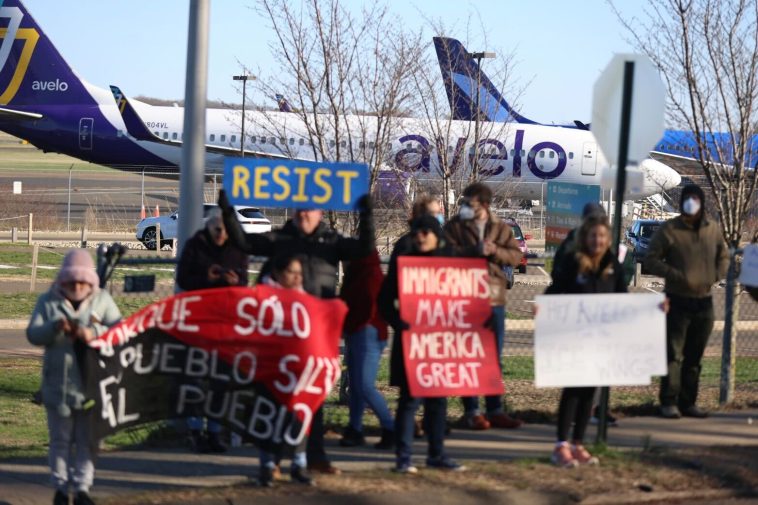
The legislative push against Avelo’s deportation flights is part of a larger grassroots movement that spans multiple states. Activists, community leaders, and civic groups from Delaware to Michigan are joining forces to demand that state agencies prioritize human rights over financial gain.
Several local communities have organized protests and boycotts to pressure lawmakers and businesses alike. The grassroots sentiment is clear: when a company is identified as being involved in practices that sidestep due process, public institutions should reconsider any economic support provided to them. This sentiment is encapsulated in a simple but powerful call for accountability:
- Public agencies must reassess contracts with airlines involved in contentious government operations.
- Taxpayer dollars should only back companies that uphold constitutional guarantees.
- Transparency is critical for rebuilding the erosion of trust in both public institutions and major corporations.
This broad movement underlines the idea that government and the private sector must work together, maintaining a careful balance between economic imperatives and the need to protect civil liberties. As state officials and legislators debate the merits of the SAFE AIR Act, they are forced to reckon with the tricky parts of balancing fiscal responsibility against the very human need for fair legal treatment.
The Long-Term Implications for the Deported Community and Civil Rights
At the heart of the controversy surrounding deportation flights is the impact on individuals and communities affected by these operations. The use of commercial airlines to transport detained individuals has raised serious concerns about the protection of civil liberties, with critics asserting that the practice is essentially a violation of the basic legal rights that underpin American justice.
Advocates for the bill argue that it is not only about penalizing airlines’ questionable partnerships with governmental bodies but also about protecting those caught in the crossfire. The implications for individuals are profound:
- The potential for wrongful detention and expedited deportation processes without due judicial oversight.
- The risk of eroding the fine points of constitutional rights, such as access to legal counsel and a fair hearing.
- The broader impact on immigrant communities that might view these actions as indicative of a wider disregard for human rights.
The SAFE AIR Act is, therefore, seen by many as a crucial safeguard for ensuring that state support does not inadvertently contribute to a system where due process is compromised. In this light, the bill is less about penalizing economic activity and more about affirming the state’s commitment to civil rights and transparency.
Analyzing Economic Pressures Amidst Political Controversies
It is important to understand that the aviation industry, like many others, is regulated by market pressures and intense competition. Airlines are constantly working through a series of overwhelming challenges, including rising fuel prices, operational costs, and evolving security requirements. In this context, tax exemptions play a super important role in keeping operations financially viable.
However, when these tax breaks support practices that undermine the rule of law, questions naturally arise regarding fiscal accountability. The argument is simple: while fiscal support measures are designed to lessen economic burdens, they should not become a back door for subsidizing activities that might be seen as compromising ethical or legal standards.
Furthermore, the debate surrounding Avelo’s role in deportation flights underscores the broader political tensions between conservation of taxpayer funds and the need to ensure that those funds are used in a way that upholds the public’s trust. Critics of the current system suggest that:
- There is a need for enhanced transparency in the way government contracts with private entities are awarded and maintained.
- Accountability measures must be put in place to ensure that any financial benefits provided by the state do not indirectly promote questionable practices.
- The competitive dynamics of the aviation industry should never be allowed to override the protection of civil liberties.
This conversation is particularly relevant today as public trust in government agencies and large corporations is under intense scrutiny. As debates over taxpayer funding and civil rights intensify, policymakers must figure a path that addresses both economic realities and the need for robust protection of individual liberties.
Public Opinion and the Role of Media in Shaping the Debate
Public discourse on the Avelo controversy has been fueled in large part by media coverage, community outreach, and activist interventions. In today’s landscape—where trust in both corporate entities and major news organizations is often on edge—independent journalism plays a critical role in keeping the conversation grounded in factual reporting and balanced analysis.
Media outlets that cover these developments aim to provide in-depth research on the small business and economic sectors affected by legislative changes, while also offering insight on the broader political and social implications. This multi-faceted approach enables the public to get into the details of key issues, including:
- The financial mechanics of jet fuel tax exemptions and their role in the airline industry,
- The human impact of deportation flights and their alignment with constitutional practices, and
- The challenge of balancing state oversight with the economic imperatives of commercial aviation.
By presenting these facets in a clear and unbiased manner, the media fosters a space for robust discussion—a discussion that is absolutely necessary in an era where misinformation and polarization are common. For stakeholders across the spectrum, it is crucial that their perspectives are represented fairly, and that the long-term implications of policies like the SAFE AIR Act are thoroughly interrogated.
Implications for Business Tax Laws and Small Business Concerns
The debate also raises important questions about business tax laws and their impact on small businesses operating within the broader supply chain of the aviation and travel industries. As state agencies consider revising or amending tax policies, it is essential to understand that any change to the current system might have ripple effects beyond large carriers like Avelo.
Small businesses, whether directly connected to aviation or indirectly dependent on travel and tourism, could feel the impact of adjustments to tax exemption policies. In this regard, there are several essential factors to weigh:
- Economic Spillover: Changes in tax policy for large airlines may indirectly affect smaller enterprises that benefit from tourism and travel-related activities.
- Administrative Burden: With new rules, there is the potential for more extensive regulatory oversight, which could complicate matters for businesses trying to figure a path through confusing bits of compliance issues.
- Market Stability: The uncertain climate around certification and accountability measures might prompt small businesses to brace for shifts in consumer behavior and market trends.
In balancing these factors, lawmakers must ensure that new tax reforms protect public interests without imposing excessive burdens on business operations, especially during times of economic uncertainty. Crafting policies that are fair, transparent, and considerate of both human rights and market dynamics represents one of today’s most challenging political tasks, one that demands input from a wide array of stakeholders—from large corporations to local small businesses.
Future Prospects: Legislative and Market Shifts Ahead
Looking forward, the outcome of the SAFE AIR Act debate is likely to have long-term implications for how public agencies work with commercial airlines and other large corporations. Although the bill is currently under consideration in the New York State Senate’s Committee on Procurement and Contracts, its passage could signal a shift in how state funds are allocated with respect to controversial government contracts.
If passed, the legislation would set a precedent that other states might follow when dealing with similar issues. This move could lead to a broader national conversation regarding:
- Enhanced accountability measures for companies receiving public subsidies,
- Improved transparency in government contracts, and
- A renewed focus on protecting civil liberties in the face of economically motivated business practices.
Moreover, the pressure from grassroots movements and local communities is unlikely to wane. As protests, boycotts, and legislative campaigns gain momentum across several states—including New York, Florida, and Michigan—public officials will need to take a closer look at how these new pressures can reshape policy. The dual challenges of satisfying taxpayer expectations while maintaining competitive and sustainable business practices are set to redefine the interplay between state oversight and market operations.
This shifting landscape will also force regulatory bodies to work through the nerve-racking twists and turns of implementing new standards for contractual accountability. Agencies will have to find ways to draft and enforce policies that not only cut down on economic waste, but also ensure that no business benefits unjustly from practices that carry heavy social and ethical implications.
Exploring the Fine Points of Civil Liberties in a Globalized Economy
In our increasingly interconnected global economy, the debate over deportation flights and fuel tax exemptions underscores a broader challenge. It is a question of how economies that are driven by both market forces and public accountability can ensure fair treatment of individuals whose rights might be compromised due to commercial practices.
The legal battles and policy debates surrounding deportation flights touch on several subtle parts of civil rights issues. Among these are:
- The Right to Due Process: This fundamental principle ensures that individuals are not subjected to expedited or unfair legal proceedings without the opportunity for a fair hearing. It is a concept that must be preserved regardless of economic or political pressures.
- Transparency in Government Contracts: When public funds are involved, especially millions of dollars in tax exemptions, the process by which contracts are awarded and maintained should be open to public scrutiny.
- The Balance of National Security and Human Rights: In a time when issues of immigration and national security are highly charged, striking the right balance becomes both essential and a matter of public trust.
Engaging in this debate is, in many respects, a microcosm of the broader struggle to reconcile state interests with human rights. As policymakers continue to wrestle with these nagging questions, it becomes clear that the resolution will require collaboration, transparency, and a mutual commitment to both economic stability and constitutional integrity.
Steps Toward Greater Transparency and Accountability in Public Policy
One of the most constructive outcomes of this debate could be the establishment of clearer guidelines for government contracts and taxpayer-funded benefits. Through such measures, states could ensure that public funds are allocated only to those entities that uphold the required legal and ethical standards.
Key steps that could move this agenda forward include:
- Implementing Strict Contractual Criteria: Establishing clear benchmarks related to judicial oversight and due process for participation in sensitive operations such as deportation flights.
- Enhancing Oversight Mechanisms: Creating independent review boards to monitor how public funds and tax exemptions are used, ensuring accountability at every stage.
- Strengthening Public Reporting Requirements: Mandating regular and transparent reporting on the use of taxpayer dollars to bolster public trust and enable informed debate.
- Engaging Stakeholders: Bringing together industry experts, community advocates, and civil rights organizations to help shape fair and balanced policies.
By adopting these measures, legislators and governmental agencies can work through the overwhelming challenges of crafting policies that not only safeguard financial resources but also protect individual rights. These steps represent a proactive approach to managing your way through the little twists of a system that is, at times, as complicated as it is competitive.
The Role of Community Advocacy in Shaping Business and Legal Reform
Community groups, local activists, and grassroots organizations play an undeniably crucial role in this debate. Their efforts have brought to light the hidden complexities of government contracts and the ethical considerations associated with subsidizing controversial airline practices.
Advocacy efforts have highlighted several important points:
- There is a strong public demand for transparency in how taxpayer money is used, especially in cases where financial incentives might encourage ethically questionable practices.
- Local protests and campaigns force policymakers to take a closer look at the potential impact of these policies on vulnerable communities.
- Grassroots movements ensure that the voices of everyday citizens are not drowned out by corporate interests, promoting a more inclusive dialogue on public policy.
Community advocacy has thus become a catalyst for change, prompting legislators and regulators to review and, in some cases, overhaul their approaches to public contracts. In an environment where business and legal frameworks often seem loaded with issues, the push from everyday citizens stands as a reminder that policies must serve the greater good, not just a select few.
Concluding Thoughts: The Road Ahead for Civil Liberties and Economic Accountability
The debate over Avelo Airlines’ deportation flights—and the proposed revocation of jet fuel tax exemptions—captures the essence of a critical moment in American policy-making. It is a moment that forces us to reckon with the delicate balance between economic support for the airline industry and the urgent need to preserve civil liberties and ensure transparency in government spending.
As states like New York consider the SAFE AIR Act, the discussion extends far beyond just one airline or one type of government contract. It challenges us to take a closer look at how taxpayer funds should be used, how government oversight should be managed, and, most importantly, how the rights of individuals can be safeguarded against potentially harmful economic policies.
The ramifications of this debate are not limited to the corridors of state government or the boardrooms of major corporations. They resonate across communities, affecting the lives of immigrants, the trust of taxpayers, and the very foundation of public policy in our nation. In a time when every dollar of public funding is scrutinized, it is both critical and super important that safeguards are in place to ensure that this money does not inadvertently support practices that violate the due process rights of individuals.
Ultimately, the unfolding conversation around Avelo and similar cases is a call for all stakeholders—legislators, business leaders, advocates, and the general public—to work together in creating a system that is transparent, accountable, and just. As we continue to figure a path through these nerve-racking twists and turns, let us remember that the goal is not only economic stability but also the protection of the values that form the very core of our society.
By taking proactive measures to re-examine public contracts, re-assess the criteria for taxpayer-funded benefits, and insist on transparency in every aspect of the policymaking process, we have a real opportunity to strengthen our democratic institutions. It is a challenging journey, one full of complicated pieces and overwhelming issues, but it is a journey we must undertake if we are to build a future where the rights of every individual are respected and public funds are used responsibly.
In closing, the discussion around the SAFE AIR Act serves as a potent reminder that government actions must always be measured against the twin pillars of economic prudence and human rights. Only by addressing both can we hope to create a policy framework that benefits all—ensuring that our public institutions remain accountable, our taxpayer dollars are well spent, and our civil liberties are never compromised in the pursuit of economic gain.
As this debate continues to evolve, it remains incumbent upon all of us to stay engaged, informed, and ready to advocate for a system that truly reflects the values we hold dear. Whether through grassroots activism, thoughtful dialogue, or diligent oversight by our elected representatives, the road ahead demands a collective effort to transform these challenging debates into constructive policies for the common good.
Originally Post From https://ctmirror.org/2025/06/27/avelo-deportation-flights-jet-fuel-tax-bill/
Read more about this topic at
Fly Rights | US Department of Transportation
S.178 – Airline Passengers’ Bill of Rights 118th …