Closing the Productivity Gap in U.S. Manufacturing: Why Investing in AI and Robotics Is Critical
The U.S. manufacturing sector finds itself at a pivotal moment. While factories overseas—especially in China—are buzzing with advanced automation solutions, many American plants continue to rely on traditional methods. This opinion editorial explores why boosting investments in artificial intelligence (AI) and robotics isn’t just a trendy move but a strategic necessity for U.S. manufacturing to reclaim its competitive edge.
In this piece, we’ll dig into the current state of American manufacturing, examine some of the tricky parts and tangled issues surrounding technology adoption, and offer practical suggestions for investors and business leaders looking to seize this moment. We’ll also discuss workforce transformation, draw comparisons with international counterparts, and stress why tech investments far outweigh the appeal of protectionist measures like tariffs.
Evaluating U.S. Manufacturing AI Adoption: Facing the Data Gap
Recent reports from the Boston Consulting Group (BCG) reveal that only 46% of U.S. manufacturers currently incorporate AI into multiple aspects of their operations—compared to a striking 77% adoption rate in China. These numbers aren’t mere statistics; they point to a productivity gap that could widen if American companies do not learn to figure a path through the maze of technological advancements.
What exactly does this gap mean? Here are some key observations:
- Underutilization of Technology: While global benchmarks indicate that 72% of companies worldwide are routinely employing AI, fewer U.S. firms provide the necessary training for frontline employees.
- Outdated Workflows: The workflow structures in many domestic factories carry confusing bits and tangles that slow down modern automation practices.
- Management Support: Limited leadership backing for new technologies creates an intimidating environment that hinders rapid adoption.
American manufacturers face many of the same challenges found in other industries—a mix of intricate training requirements, resistance to change, and the need to invest in cutting-edge technology. However, the potential rewards for managing these obstacles are huge; a modernized, AI-integrated factory is not only more efficient but also far more resilient against global competition.
How State-Backed Policies Propel Productivity: A Global Perspective
China’s success in integrating AI into manufacturing isn’t by chance. It is the result of an aggressive, state-backed industrial policy paired with substantial investments in technology. The strategic backing not only leads to more efficient use of robotics but also creates an environment where even the tricky parts and complicated pieces of modern technology become manageable.
A comparative table illustrates some of the differences between U.S. and Chinese approaches:
| Aspect | China | U.S. |
|---|---|---|
| AI Adoption in Processes | 77% | 46% |
| Regular Use of AI by Global Firms | 72% | Lower, with inconsistent training |
| Government Support | Strong, state-led initiatives | Largely market-driven, with minimal direct intervention |
| Cost Efficiency | Outperforms by double digits in many sectors | Lagging behind in competitive terms |
This table highlights the need for American manufacturers to steer through the maze of policy reforms and private-sector ingenuity. While the U.S. approach relies largely on market-driven factors, understanding and integrating some aspects of state-supported initiatives could help overcome many of the nerve-racking obstacles that have held back progress so far.
Robotics and AI: Transforming Production Lines for a Competitive Edge
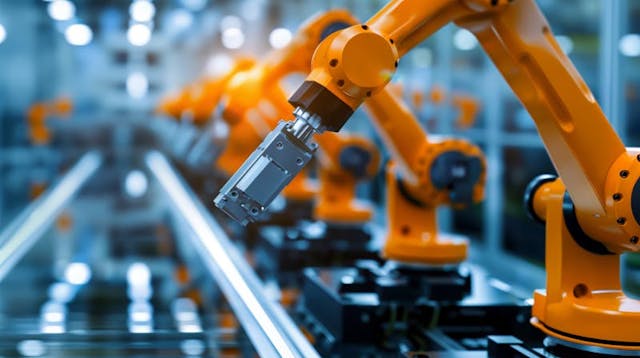
Companies that have embraced these technologies are already reaping significant rewards. Consider the example of a manufacturer employing AI-driven predictive maintenance algorithms and robotic process automation, which led to a 30% decrease in production times and a 40% reduction in defects. Such improvements enable firms to boost EBITDA margins by an impressive 20–30% relative to less automated competitors.
Here’s why robotics and AI are reshaping production:
- Faster Production Speeds: Robotics can take over repetitive and physically demanding tasks, allowing human workers to focus on higher-level operations.
- Improved Quality Control: AI algorithms analyze production data in real time, helping companies to quickly identify and correct production errors.
- Cost Savings: Process automation reduces waste, slashes overall labor expenses, and improves cost efficiency, which is vital for competing against overseas factories.
The real beauty of these technologies lies in their ability to streamline production while maintaining high quality. Investment in robotics not only modernizes the production environment but also injects a level of precision and agility that traditional manufacturing methods simply can’t match.
Building an Investment Thesis: Where to Channel Capital
Investors looking to benefit from these technological shifts must be discerning. The investment playbook for modern U.S. manufacturing should include backing companies that are effectively bridging the AI gap. The following categories offer promising avenues for investment:
Hardware Innovators
Manufacturers like ABB Robotics and Teradyne are already known for their modular systems that retrofit legacy factories. By integrating these systems, older production lines can be updated quickly, yielding immediate productivity benefits.
AI Software Providers
Firms such as C3.ai and Bright Machines specialize in addressing the tricky parts of workflow reengineered for AI integration. Their solutions are designed to help companies take that crucial leap into automation by solving complicated workflow challenges.
Vertical Integration Plays
Companies like MSP Manufacturing provide an operating manual on how to scale AI across the supply chain. Investors might also look at ETFs like Global X Robotics & Automation (ROBO), which track sector performance and offer diversified exposure to this booming market.
A summarizing bullet list of key investment pointers includes:
- Back firms with a proven track record in retrofitting older plants with smart robotic systems.
- Prioritize investments in companies that provide integrated AI solutions across multiple production facets.
- Keep an eye on ETFs tracking the robotics and automation sectors to benefit from diversified risk.
- Consider companies that are not only improving efficiency but are also addressing workforce upskilling to ensure sustainable growth.
Workforce Transformation: Upskilling and the Human Dimension
One of the more nerve-racking concerns surrounding the push for automation is the potential impact on employment. However, evidence suggests that companies investing in AI actually improve productivity while retaining, even enhancing, their workforce—provided that they make the effort to train employees adequately.
For example, Microsoft’s partnership with Siemens has led to upskilling initiatives that not only reduced employee turnover by 15% but also fostered a more engaged workforce capable of handling AI-driven tools. In the long run, the key isn’t to fear technological change but to manage your way through it by investing in comprehensive training schemes for production staff.
By focusing on human capital and the little details of training, companies can address several of the system’s confusing bits:
- Customized Training Programs: Tailored courses that address the specific challenges of integrating AI into traditional processes.
- Continuous Learning: Establishing programs that allow for ongoing professional development as technology evolves.
- Collaborative Environments: Creating inter-departmental teams that combine the expertise of long-time workers with new tech-savvy talent.
These measures are not merely add-ons; they are fundamental to ensuring that the digital transformation is a success. Workers must know how to keep their skills current if they are to collaborate effectively with AI and robotics systems.
Rethinking Tariffs: Why Protectionist Measures Fall Short
Some critics might argue that the solution is to impose punitive tariffs on overseas competitors. However, research from institutions such as Goldman Sachs points out that tariffs are nothing more than a “band-aid on a bullet wound.” Simply protecting domestic industries through tariffs does little to address the underlying, tangled issues of outdated technology and lagging automation.
Consider these fine shades of the debate:
- Limited Output Growth: U.S. manufacturing output per worker grew at a mere 0.3% annually between 2010 and 2020, compared to 4.2% in China.
- Cost Efficiency Deficit: Activating tariffs may temporarily level the playing field, but they don’t substitute for the essential need to upgrade technological capabilities.
- Global Competitiveness: Without modernizing production, U.S. manufacturers cannot hope to compete in cost efficiency or innovation over the long term.
Given these points, the argument is clear: progress isn’t about erecting trade barriers, but about mastering technology and making crucial investments in advanced manufacturing processes. The focus must remain on facilitating a smooth digital transition rather than attempting to shield domestic industries through protectionist policies.
Comparing Global Practices: A Closer Look at AI-Driven Automation
When you take a closer look at the global landscape, it’s evident that countries leading in AI-driven manufacturing have taken bold steps that the U.S. must emulate. In China, government-backed initiatives are combined with high private-sector investment to create a dynamic automation environment.
The U.S., however, faces several challenges that are full of problems and tangled issues. These include:
- Training Gaps: Less than one-third of U.S. manufacturing workers receive the comprehensive training necessary to deploy AI tools efficiently.
- Workflow Inflexibility: Many companies continue operating with outdated workflows that do not lend themselves to quick adaptation of AI processes.
- Leadership Hesitation: A cautious approach at the leadership level means that transformative technologies are often implemented too slowly.
Addressing these problems doesn’t require an overnight revolution. Instead, companies can take manageable steps—by investing in pilot projects, partnering with established tech providers, and integrating robust employee training programs. Over time, these small but consistent measures can add up, closing the productivity gap significantly.
Advanced AI-Driven Manufacturing Strategies: Best Practices for Integration
Many industry analysts recommend a phased approach to integrating AI and robotics into existing manufacturing frameworks. This method helps overcome the intimidating nature of technology upgrades while ensuring that each step adds measurable value.
Some best practices include:
- Start Small, Scale Fast: Begin with pilot projects to test AI applications on select production lines. Analyze the outcomes and refine the process before a full-scale rollout.
- Focus on Predictive Maintenance: Use data analytics to predict equipment failures before they occur. This not only minimizes downtime but also prolongs the life of critical machinery.
- Implement Robotic Process Automation (RPA): Automate repetitive and high-volume tasks to free up human resources for tasks that require creative problem solving.
- Integrate Cloud-Based Solutions: Leverage cloud computing to provide real-time monitoring and data analytics, ensuring that factories remain agile in their operations.
The critical point here is not to be overwhelmed by the nerve-racking reputation of these shifts. Instead, it’s about breaking the process down into small, manageable tasks. By tackling the little details one step at a time, companies can take control of the more complicated pieces of integrating AI and robotics into their production systems.
Addressing the Human Element: Balancing Technology and Labor
The interplay between human labor and automation is perhaps one of the most subtle parts of modern manufacturing improvements. While many fear that robots might replace human workers, the data suggest otherwise. In fact, with proper training and management support, employees can work alongside machines to achieve better overall productivity.
Key considerations for managing this transition include:
- Employee Re-skilling: Offer regular training sessions that are designed to help workers become proficient in using AI tools and robotic systems.
- Enhanced Safety Protocols: New technologies often bring new safety challenges. It’s essential to update protocols and practices to protect both human workers and expensive machinery.
- Cultural Shift: Encourage a company culture that embraces change rather than fearing it. Celebrate small wins as production lines transition toward more automated processes.
- Collaborative Technology Design: Involve employees in the selection and design of new systems. Their on-the-ground insights can highlight potential issues and drive more user-friendly solutions.
By combining technological investments with a robust human resources strategy, U.S. manufacturers can ensure that workforce transition is as smooth as possible. The goal is not to replace workers, but to augment their capabilities to handle more strategic and creative aspects of manufacturing.
Investing in the Future: Why Timing Is Everything
With productivity gains linked directly to quicker AI adaptation, now is the time to make capital investments. Waiting too long could leave U.S. manufacturers further behind, especially as rivals continue to leverage AI to cut costs and increase output. The data are unmistakable: factories that integrate AI and robotics early gain a significant productivity lead.
Investors should consider the following key points when constructing their investment theses:
- First-Mover Advantage: Companies that are early adopters of AI solutions reap long-term benefits through improved efficiency, better product quality, and more agile supply chains.
- Scalable Technologies: Favor technologies that offer scalable solutions, meaning they can be rolled out across different parts of the production chain for cumulative benefits.
- Return on Investment (ROI): Look at case studies such as MSP Manufacturing, where investment in predictive maintenance and robotic process automation led to measurable ROI improvements.
- Diversification: Spread investments across hardware innovators, software providers, and integrated services to reduce risk while tapping into multiple growth vectors.
In summary, the investment landscape is replete with opportunities for those who are prepared to work through the twists and turns of modernizing manufacturing. Whether by directly investing in trailblazing companies or supporting ETFs that capture broad sector growth, investors have the chance to be part of a profound shift in how factories operate in the 21st century.
Looking Ahead: The Future of U.S. Manufacturing in an AI-Driven World
Looking forward, the path for U.S. manufacturers is clear. The only way to overcome persistent productivity gaps and keep pace with global competitors is to take the leap into advanced automation. As data streams and AI capabilities become more refined, the balance of power in manufacturing will shift further toward those who have made the calculated investments in new technology.
While the road may be twisted and filled with confusing bits—from adapting organizational structures to implementing robust digital training programs—the rewards are tremendous. Advanced AI and robotics can unlock up to 80% of potential productivity gains as noted in various industry analyses. This is not a distant dream; it’s an achievable target with the right mix of strategy, investment, and persistent effort.
In a world where change is inevitable, U.S. manufacturing must take proactive steps to retool and reimagine its production lines. The opportunity for revitalization does not lie in clinging to outdated systems or relying on tariffs to provide a temporary cushion. Instead, the solution is to dive in, invest in modern technologies, and directly address those nerve-racking challenges that have held the industry back for too long.
Final Reflections: Betting on Technology Over Trade Wars
Ultimately, the message for U.S. manufacturers is one of urgency and forward-thinking strategy. Protectionist measures like tariffs may offer short-term relief, but they do not address the long-term need to reenergize production processes. The evidence is in the numbers: countries that have embraced AI and robotics outperform those that rely solely on traditional tactics.
The debate over technology versus trade policy is loaded with problems if looked at through a narrow lens. Instead, businesses and investors should focus on practical, actionable steps that translate into better efficiency, improved margins, and enhanced global competitiveness.
Here’s what industry stakeholders need to take away:
- Embrace Change: The time to invest in AI and robotics is now. The longer companies wait, the more they risk getting stuck with outdated, inefficient systems.
- Invest in People: Technology is only as good as the people who operate it. Robust training programs are essential to ensure that workers can partner effectively with new technologies.
- Look Beyond Tariffs: Trade policies have a limited effect on productivity. The real competitive advantage will come from internal modernization and better technology adoption.
- Plan Strategically: Create a clear, phased plan for technology implementation. Pilot projects, ROI analysis, and scalable solutions should form the backbone of any transformation strategy.
These reflections underscore a super important truth: the future of U.S. manufacturing relies on the deliberate and decisive integration of advanced technology. It’s a path rife with challenges, but also one that promises exponential rewards.
Conclusion: Steering U.S. Manufacturing Toward a High-Tech Future
The conversation around AI and robotics in manufacturing isn’t just academic—it directly impacts real-world competitiveness and economic health. The U.S. industry is at a crossroads, and making your way through today’s tangled issues will determine whether American factories can keep pace in a rapidly changing global market.
Investing in advanced automation, modernizing production workflows, and upskilling the workforce are steps that, while intimidating at first, are ultimately necessary for long-term growth. Companies that master these little details and overcome the nerve-racking complexity of integrating new systems will see enhanced efficiency, higher quality products, and improved profitability.
It’s time to take the wheel and steer through these challenging twists and turns. By working through the subtle parts of technology adoption, leveraging the best practices from global leaders, and focusing on scalable, sustainable investments, U.S. manufacturers can not only close the productivity gap but also create a foundation for future success.
For investors and business leaders alike, betting on AI and robotics is more than a mere trend—it’s the blueprint for a new era of industrial strength and innovation. The opportunity is ripe for those who are ready to figure a path through the complexities of today’s market and drive U.S. manufacturing toward a vibrant, competitive future.
Originally Post From https://www.ainvest.com/news/closing-productivity-gap-manufacturing-bet-ai-robotics-2506/
Read more about this topic at
Automate to Dominate: Leveraging Technology for …
Automate to Dominate by CJ Howe | eBook