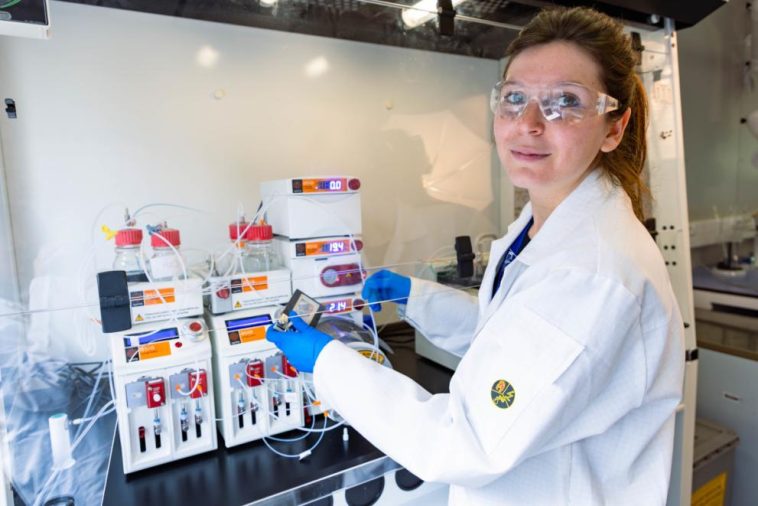

Reassessing the EU Life Sciences Strategy
The European Commission’s recent life sciences strategy offers a bold vision of global leadership—a vision that is both ambitious and invigorating. Yet, as many research organizations and experts have noted, the plan appears to overlook one of the most critical elements of sustained scientific breakthroughs: the generation of new, basic knowledge. In this opinion piece, we take a closer look at the EU’s strategy, examine its many facets, and discuss where it shines and where it seems to fumble, particularly in the realm of basic research.
At first glance, the strategy exudes confidence. The plan attempts to integrate various policies and funding measures in order to lift European innovation to soaring heights on the global stage. However, the document has been met with mixed feelings by key stakeholders within the research community, who worry that by sidelining fundamental science, Europe risks undermining future breakthroughs in fields such as biomedical innovation.
Targeting Global Leadership in Life Sciences
The EU’s life sciences strategy positions Europe as a future global leader. It is meant to consolidate past efforts while rolling out new initiatives that directly target areas of high innovation and rapid development. Proponents of the strategy are encouraged by statements asserting that Europe already leads in many scientific fields. However, this notion glosses over some of the tangled issues associated with creating genuinely transformative knowledge.
Emphasizing Applied Innovation Over Basic Science
One of the standout points in the strategy is its focus on developing and deploying innovations. While practical applications have their undeniable perks—such as immediate economic impact and clear industrial benefits—there is a real risk that innovation might be stifled without the steady influx of new ideas generated by fundamental, curiosity-driven research.
Marta Agostinho, executive director of a prominent life sciences research alliance, summed up a critical concern when she stated that the strategy “misses the point of creating new knowledge.” Such critiques highlight a worrying trend: when strategy shifts too heavily toward applied science, the foundation necessary for sustained long-term innovation can be dangerously undermined.
Balancing Ambition With the Hard Realities of Science Policy
The EU’s ambition to leapfrog established global leaders in life sciences is laden with challenges. One cannot ignore the nerve-racking task of reconciling policy ambitions with the unpredictable nature of scientific research. The plan appears to bank on the assumption that existing scientific momentum is enough to shoulder the responsibility of innovation even with fewer resources allocated to fundamental research.
Behind the numbers and policy statements, there exists a simple yet problematic truth: effective research depends on a balanced portfolio that ranges from high-risk, foundational science to more market-ready innovations. Without this balance, every initiative risks becoming short-sighted.
Understanding the Missing Element: Basic Research
While policymakers and industry leaders celebrate the advancements made possible by innovation-focused research, the underlying framework of basic science—which serves as the reservoir for tomorrow’s breakthroughs—is not receiving the critical attention it deserves. Many experts believe this oversight is self-defeating in the long run.
The Inherent Value of Knowledge Production
Basic research plays an essential role in paving the way for applied innovations. By laying down the groundwork of scientific inquiry, basic research illuminates new paths, identifies subtle details that can lead to groundbreaking discoveries, and thoroughly prepares the field for applied development. The EU’s strategy seems to dismiss this fact by presupposing that Europe’s scientific leading position eliminates the need for continuing fundamental exploration.
It is important to remember that the research community often works through confounding twists and turns. The success of applied research is deeply intertwined with basic research. Without a diligent focus on the creation of new knowledge, any applied research efforts might soon hit a wall.
Comparative Approaches From Around the Globe
Across the world, visionaries in research and industry are increasingly advocating for models that combine robust funding for both basic and applied research. In the United States, for example, significant resources are still allocated to exploratory science—a move that has yielded transformative discoveries time and again. Asia, too, is making strides by ensuring that its exponential growth in innovation is built on the bedrock of fundamental research.
In contrast, Europe’s current strategy may represent a departure from this balanced paradigm. The focus on short-term results, industry relevance, and market-specific outcomes risks leaving behind the nurturing of ideas that might only bear fruit over a longer horizon.
Analyzing the Economic and Policy Implications
In considering the broader economic implications, it is vital to take into account the challenges that policy missteps can create. Funding policies in research are never straightforward, and the balance between immediate industry impact and future breakthroughs is loaded with issues that demand careful reflection.
Potential Economic Benefits of Enhanced Basic Research
A clear understanding of the importance of basic research could pay dividends in the long run. When policy encourages exploration of unknown scientific terrains, the outcomes are often revolutionary. For instance, advancements in biomedical sciences frequently trace their origins back to puzzle-solving in basic research laboratories. Even though the results might not have immediate commercial applications, over time, they lay the framework for commercial successes in biotechnology, pharmaceuticals, and other fields.
Consider the following benefits of increased investment in basic research:
- Increased opportunity for disruptive innovations
- Training a new generation of scientists who can think critically and creatively
- Establishing long-lasting networks between academic institutions and industries
- Strengthening Europe’s overall competitiveness in the global arena
Each of these benefits contributes to a sound economic strategy that not only addresses the tricky parts of current market demands but also anticipates future challenges and opportunities.
Effects on Industrial Manufacturing and Technological Integration
One of the key areas where European policy intersects with broader economic strategy is industrial manufacturing. As new technologies emerge from basic research, they often usher in transformative changes across the manufacturing landscape. For instance, the evolution of nanotechnology and biotechnology has deep ties with initial basic research discoveries. When Europe loses sight of these foundational areas, the manufacturing sector could face a shortage of innovative materials or processes that keep it competitive.
Moreover, modern manufacturing increasingly depends on the accurate application of science. A robust research ecosystem acts as a bridge between scientific potential and industrial application. Without a consistent focus on underlying research, the industry might end up grappling with complicated pieces of outdated processes or relying on external solutions which could be less aligned with local needs and capabilities.
Impacts on Electric Vehicles and Automotive Innovation
The EU’s ambition extends beyond traditional life sciences. It touches upon areas that straddle industrial manufacturing, including burgeoning sectors like electric vehicles (EVs) and automotive innovation. EVs, in particular, are a prime example of how essential basic research is to the broader innovation ecosystem.
Foundations of Battery Technology and Material Science
The development of high-efficiency batteries, improved charging systems, and lighter automotive components all require a deep understanding of material science—a field firmly anchored in basic research. Without continuous exploration into fundamental scientific questions, the automotive sector can quickly reach a plateau in terms of technological advancement.
For instance, while current battery technologies are promising, truly transformative improvements depend on breakthroughs that often have their genesis in uncharted scientific explorations. Europe’s strategy in life sciences could benefit from a similar commitment to underlying research, illustrating a parallel with how basic science informs applied technological innovations in the automotive world.
Collaborative Opportunities and Policy Coordination
Another point of intersection between the sectors of life sciences and automotive innovation is the need for collaborative opportunities between academic institutions, researchers, and industry players. Policy that forgets the importance of nurturing basic research inadvertently narrows the space for such collaborations, making it harder to bring the best minds together and facilitating the emergence of new ideas.
To achieve a more productive dialogue, some suggestions from industry experts include:
- Developing balanced funding models that support both fundamental and applied research.
- Creating intersectoral partnerships that use the strengths of each field as leverage for broader innovation.
- Encouraging open communication channels between researchers, manufacturing experts, and policymakers.
These measures could serve as the blueprint for integrating different sectors into a cohesive strategy that not only addresses industry-specific challenges but also leverages the cross-industry benefits of a strong research foundation.
Addressing the Hidden Complexities in Policy Formulation
While many applaud the bold moves in Europe’s strategy, there are several confusing bits and nerve-racking uncertainties that rear their head when one takes a closer look at the policy’s formulation. It is important to acknowledge that policy development in the realm of life sciences is not just about charting a course for immediate success—it is also about setting up a framework that encourages continued exploration in both familiar and new territories.
The Subtle Parts of Funding Allocation
One area of considerable debate is the allocation of funding. The strategy appears streamlined on paper, but its actual implementation may encounter several twists and turns. For example, when a large slice of the available budget is allocated to commercialization and short-term market application projects, the smoother path for exploratory research might lose momentum. In essence, what makes funding models so effective are the little details—the overlooked subsidies for unforeseen exploratory projects that often lead to revolutionary discoveries.
The situation calls for a thorough review of funding practices that have proven effective elsewhere. By comparing different funding models and integrating the most successful elements, policymakers could better address the subtle parts of this challenge, ensuring that essential exploratory work receives support.
Risk, Reward, and the Value of Patience in Research
The road to scientific discovery is sometimes intimidating and always unpredictable. Often, the challenging parts of bridging basic and applied research involve managing expectations and understanding that real breakthroughs can be nerve-rackingly slow to materialize. The EU strategy’s focus on rapid market results might inadvertently pressure researchers to prioritize quick wins over experiments that don’t promise immediate returns.
Yet, history in science has repeatedly shown that meaningful breakthroughs often come from discoveries that were initially overlooked because they did not seem commercially viable. It is crucial for policymakers to bear in mind that the rewards of basic research, however far off in the future, can be monumental. A more balanced approach would emphasize patience, giving science the space it needs to work through its own tangles and yield results that benefit multiple sectors over the long term.
Insights Into Collaborative Research Funding Structures
Modern research successes hinge on robust collaboration between public institutions, private companies, and policymakers. The EU life sciences strategy is not an isolated policy; it is woven into a larger fabric of funding and research allocation. Effective collaborative research funding structures can transform academic discoveries into real-world innovations.
Learning from Successful Models Worldwide
Several global models for collaborative research offer routines that Europe could adopt. For example, in the United States, agencies often use a mix of public funding, private investment, and academic partnerships to nurture both exploratory and applied projects. Similar initiatives in Asia show how intertwining industry needs with academic curiosity can lead to heightened productivity and groundbreaking innovations.
In Europe, structurally sound initiatives that combine diverse funding sources could help clear the confused bits that currently stall progress in the research ecosystem. To further illustrate this blend, consider the following table outlining key components of a balanced funding model:
| Component | Description | Benefits |
|---|---|---|
| Public Funding | Government allocations aimed at supporting both applied and basic research | Steady, reliable support; long-term stability |
| Private Investment | Funding from industry partners seeking innovative breakthroughs | Access to commercial expertise and real-world applications |
| Academic Grants | Grants offered by universities and research institutions | Encourages curiosity and fundamental science |
| International Collaboration | Joint research programs between countries and institutions | Shared expertise and risk; cross-cultural innovation |
This table highlights the need to steer through policy with a comprehensive understanding of what each funding source offers. Relying solely on one mechanism, particularly one focused on short-term outputs, might leave the research sector exposed to potential pitfalls.
Ensuring Diverse Funding Streams in Future Policies
The EU can learn a great deal from balancing funding streams by not overly privileging one form of support over another. For instance, it is essential that research institutions are given the freedom and resources to explore ideas that may not yield immediate results but hold disruptive potential in the long run. In practical terms, the strategy could incorporate:
- Long-term grants specifically earmarked for exploratory scientific projects
- Matching funds that encourage public-private collaborations
- Incentives for academic institutions to partner with industry
- Mechanisms for rapid funding reallocation when promising research areas emerge unexpectedly
Such measures would enhance Europe’s standing as a research powerhouse by ensuring that both the nerve-racking parts of discovery and the promising initial breakthroughs are fully supported.
The Role of Policy in Shaping Research Priorities
The formulation of policy in the life sciences is a nuanced process, one that must account for both immediate needs and the less obvious requirements critical to long-term success. The EU’s strategy, with its focus on translating expertise into tangible innovation, represents a well-intentioned push for progress. However, it is also a stark reminder that policies must engage with the hidden complexities of funding allocation and research balance.
Identifying the Fine Points in Strategic Vision
When policymakers craft strategies that prioritize applied outcomes, they sometimes overlook the essential groundwork provided by basic research. The EU’s strategy, by assuming that its current scientific preeminence will naturally lead to sustained innovation, falls into the trap of conflating current success with future potential.
Several fine points deserve attention when fine-tuning such strategies:
- Allocating specific portions of the budget to untested scientific ideas
- Setting realistic milestones that include both short-term applications and long-term exploration
- Engaging a broad spectrum of experts—spanning from academic researchers to industrial innovators—in policy formation
- Emphasizing the training and development of scientists who are adept at both theoretical and applied research
These subtle details help to highlight why a strategy, however promising it may seem, must maintain a delicate balance. Without this balance, Europe risks making its way through research and development with a narrow focus that, while effective in the short term, might prove limiting over time.
The Need for a Broader and Inclusive Approach
Ultimately, the most promising research policies are those that encourage cross-disciplinary collaboration. The true test of a national or regional research strategy is not only its capacity to drive marketable innovation but also its resilience in adapting to evolving scientific challenges. The EU’s plan would benefit from a more inclusive approach that integrates the creative potential inherent in basic research with the pragmatic goals of industry-focused projects.
By actively engaging in conversations about funding models and innovation pipelines with stakeholders from all levels of the research community, the EU can work through the tangled issues surrounding modern science policy. In doing so, Europe might not only confirm its leadership on the global stage but also secure the long-term intellectual foundation necessary for enduring success.
Practical Steps Toward a Balanced Research Ecosystem
The discussion surrounding Europe’s life sciences strategy offers an invaluable opportunity to rethink how policies and funding are structured not just for immediate gains, but also for sustainable progress driven by fresh ideas. Here are some practical steps that can be taken to achieve a more balanced research ecosystem:
1. Diversifying Funding Avenues
It is essential to ensure that there is a broad mix of resources available to researchers. Instead of consolidating investment into large, high-risk projects aimed solely at fast-track results, the funding should also support more experimental, original lines of inquiry. This diversification helps in cushioning against unexpected failures while still offering rewards for groundbreaking success.
Key initiatives could include:
- Establishing dedicated funds for exploratory projects that show promise but might lack immediate commercial appeal
- Setting up rapid-reaction funds that allow scientists to pivot quickly when an unforeseen discovery is made
- Creating partnerships with private entities that share a vision of long-term, sustainable scientific growth
2. Building Integrated Research Networks
By fostering a culture of collaboration, research institutions can benefit from shared experiences and diversified expertise. Integrated networks—where academia, industry, and government work in unison—offer the best of all worlds. This environment not only helps in tackling confusing bits when science encounters roadblocks but also accelerates problem-solving by pooling diverse perspectives.
Examples of fruitful collaborations might be found in initiatives that:
- Link universities with high-tech manufacturing centers
- Create joint research projects involving multiple countries and disciplines
- Encourage cross-training programs where scientists and industry experts learn from one another
3. Fostering a Culture of Patience and Persistence
In framing research policies, a change in mindset is required—one that is comfortable with the extended timelines often associated with truly innovative ideas. Instead of pursuing quick fixes, policies should be designed to nurture persistent, long-term inquiry. This approach requires both patience and a willingness to accept that some scientific questions take time to resolve.
Practical methods to foster such a culture include:
- Rewarding incremental progress as much as major breakthroughs
- Encouraging mentorship and sustained support for early-career scientists
- Publicly recognizing projects where the journey, despite a slow start, eventually leads to significant outcomes
Looking Ahead: What Should Future Strategies Embrace?
As Europe moves forward, there is a clear imperative to learn from both past experiences and current global practices. The evolving landscape of research requires strategies that are both flexible and forward-thinking. While the current life sciences strategy offers a step in the right direction, it is equally critical to ensure that it does not set aside the fundamental research that forms the backbone of all scientific progress.
The Importance of Continuous Adaptation
The world of research is ever-changing, and policies must be sufficiently agile to reflect new discoveries and shifting priorities. Rather than locking into a rigid framework, future strategies should incorporate regular reviews and adjustments. Doing so will help Europe not only maintain its scientific leadership but also quickly respond to emerging global challenges.
Key points to consider for an adaptable strategy include:
- Regular evaluation of funding effectiveness to ensure that all areas of research maintain momentum
- Establishing channels for feedback from the research community, ensuring that both industry experts and academics have a say in ongoing policy formulation
- Flexibility in resource allocation to allow rapid shifts in focus when new, promising areas of research are identified
Engaging Stakeholders in a Long-Term Vision
Any successful research policy must be built on the collective input of its stakeholders. For the EU, this means transcending the current model by involving a diverse group of participants in the discussion—from seasoned researchers and industry leaders to young scientists and emerging innovators. By creating platforms for this dialogue, policymakers can ensure that the strategy is comprehensive and truly meets the needs of the research ecosystem.
Some actionable ways to foster engagement include:
- Organizing national and international forums that bring together scientists, business leaders, and policymakers
- Implementing pilot programs that test new funding models on a smaller scale before wide-scale adoption
- Leveraging digital platforms to maintain ongoing communication and feedback loops among all stakeholders
Final Thoughts: Striking the Right Balance for Future Growth
In summary, the EU’s life sciences strategy is both ambitious and thought-provoking. It sets a bold agenda aimed at providing Europe with the tools necessary for global innovation leadership. However, the strategy’s apparent oversight of basic research represents a significant stumbling block that could hinder its long-term success.
By not fully endorsing the continuous generation of new knowledge, the plan risks compromising the very foundation on which innovation is built. In the realms of industrial manufacturing, automotive innovation, and electric vehicles, as well as within the life sciences sector, the success of applied technologies is inseparably linked to the discoveries made in basic research labs. As such, any strategy that intends to sustain growth and competitiveness must allocate balanced resources to both exploration and application.
The road ahead involves addressing the tricky parts of policy reform, balancing diverse funding mechanisms, and nurturing a culture of both immediate success and future potential. As Europe ventures to redefine its scientific landscape, future strategies should be designed with a holistic, inclusive, and adaptive approach that encourages innovation at every level.
Ultimately, the goal should be more than just asserting global leadership. It should be about creating an environment where science has the freedom to explore the unknown, and where the unpredictable yet essential rewards of basic research are recognized as indispensable to the continuum of discovery. Only by ensuring that all parts of the research ecosystem—both applied and basic—are robustly supported can Europe truly forge a path toward sustainable progress.
Key Takeaways From Europe’s Emerging Strategy
To summarize the principal messages discussed:
- While aimed at rapid innovation, the current strategy may undervalue basic research, which is critical for long-term breakthroughs.
- Balanced funding that supports both exploratory work and applied projects is essential to avoid short-sighted outcomes.
- Global comparisons indicate that successful regions invest in curiosity-driven science alongside commercialization.
- The automotive and electric vehicle sectors, among others, also benefit from advancements originating in basic science.
- Policies need to be adaptable and regularly re-evaluated to meet the evolving challenges of modern research.
- Greater stakeholder engagement across all levels can lead to a more inclusive and forward-thinking research strategy.
The Call for a Renewed Vision
It is clear that the research landscape is full of both opportunities and challenges alike. The EU’s push for global leadership is a promising step; however, it should be complemented by a steadfast commitment to the fundamental work of creating new knowledge. By taking measured steps to recognize, harness, and invest in both sides of the research coin, Europe can position itself not only as a market leader but also as a true pioneer in scientific discovery.
The future of European innovation depends on an equitable and thoughtful strategy—one that does not shy away from the complex pieces of modern science policy, but rather embraces them as intrinsic parts of an ecosystem that is dynamic, diverse, and resilient. As stakeholders, policymakers, and researchers work together to figure a path toward this balanced model, the promise of a robust, inclusive, and sustained innovation landscape becomes an attainable reality.
In closing, while the current life sciences strategy propels Europe toward a bold future, it is a timely reminder that groundbreaking innovation is built on both a strong track record of applied success and an unyielding foundation of basic research. The continuing dialogue between these two facets will be the determining factor in Europe’s ability to maintain and expand its influence on the global stage.
As we move forward, the real test will lie in the strategy’s adaptability to the nerve-racking unpredictability inherent in scientific discovery, as well as its capacity to inspire a generation of researchers to explore even the most tangled issues with persistence and passion. Only then can Europe truly claim a lasting global leadership in the life sciences and beyond.
Originally Post From https://sciencebusiness.net/news/r-d-funding/life-sciences/eu-life-sciences-strategy-pitches-global-leadership-forgets-basic-research
Read more about this topic at
New study confirms what scientists already know: basic …
A Deeper Dive into the 4 Types of Innovation: Basic …