
US Industrial Production in July: A Beneath-the-Surface Look
The July industrial production report has stirred an optimistic yet cautious dialogue for U.S. businesses. Despite early gains and promising starts earlier this year, recent data reveal a modest dip in overall industrial output. This opinion editorial takes a closer look at the developments in the manufacturing sector, mining, and utilities, considering the tricky parts of shifting trade policies, uncertain consumer spending, and evolving production trends.
The Shifting Economic Tide
The Mixed Signals of Recent Factory Data
The recent Federal Reserve report indicated a 0.1% decrease in industrial production—a figure that might seem negligible at first glance. However, this small drop is filled with subtle details that offer insight into the overall economic mood. Manufacturing, which accounts for three-fourths of industrial production, barely moved, while mining and utilities both slipped downward. Such figures compel business leaders to get into the fine points of what exactly is driving these trends.
In June, industrial production experienced an upwardly revised gain of 0.4%, a sign of earlier industry resilience. Nonetheless, the subsequent month’s performance signals that the rhythm of the economy has become a bit off-beat. With economic output remaining on edge and subject to multiple influences, the current data suggest that more comments need to be made on the underlying factors affecting the business landscape.
Consumer Spending and the Economy’s Pulse
One key indicator to watch in this scenario is consumer spending—a critical driver of economic activity. In many ways, the economy’s safe harbor is boosted by resilient retail sales, even as the manufacturing side finds itself wrestling with headwinds. The reported increase in July retail sales, following an upward revision from the previous month, hints at strong consumer behavior. Yet, this strength is in contrast to the pressures faced by manufacturers and miners.
Uneven consumer spending has played a significant role in holding back production at factories. While some sectors see an uptick in orders, others, especially within non-durable manufacturing such as textiles, apparel, and petroleum production, appear to be suffering. Business leaders and policy experts are thus left to steer through a landscape where strong consumer spending contrasts with weaker industrial signals.
The Tense Terrain of Trade Policy and Tariffs
Understanding the Impact of Trade Policy Uncertainty
The shifting policies under the current presidential administration have created a nerve-racking environment for manufacturers trying to plan their investment and production strategies. For instance, the rush of orders at the start of the year—a response to impending tariffs and the resumption of aircraft production at companies like Boeing after the hatchling of labor disputes—has recently cooled off. That early momentum has been replaced by a sense of hesitancy as companies face intimidating trade rules and finicky negotiations globally.
Trade policy has been, and remains, loaded with problems that cause global uncertainty. Business owners are forced to get into the labyrinth of shifting regulations with mixed feelings. While a proactive approach can generate short-lived boosts in production, sustained growth requires trust in a stable and predictable policy environment. The industry’s cautious spending and low-capacity utilization rates underscore how trade policies act as a double-edged sword—sparkting activity on one end while dampening it on the other.
Poking Around the Tariff-Driven Shifts
Tariffs, by design, are meant to protect domestic jobs and stimulate local production. Yet, in practice, the additional costs have left manufacturers juggling with tangled issues. Higher prices for raw materials due to tariffs have often been passed down the supply chain, leading to expensive production processes and squeezed profit margins. Many manufacturers have been forced to re-strategize, or even delay projects, while trying to mitigate the unforeseen expenses triggered by these changes.
The reported decrease in output from non-durable manufacturing—especially in textiles, apparel, and petroleum—illustrates how external trade complexities are trickling down to affect specific industry groups. The interplay between tariffs and trade negotiations with countries like China has left many on edge, as they try to figure a path between maintaining profitability and managing production efficiency.
Industry-Specific Perspectives: Manufacturing, Mining, and Utilities
Manufacturing: Mixed Signals Amid Economic Uncertainty
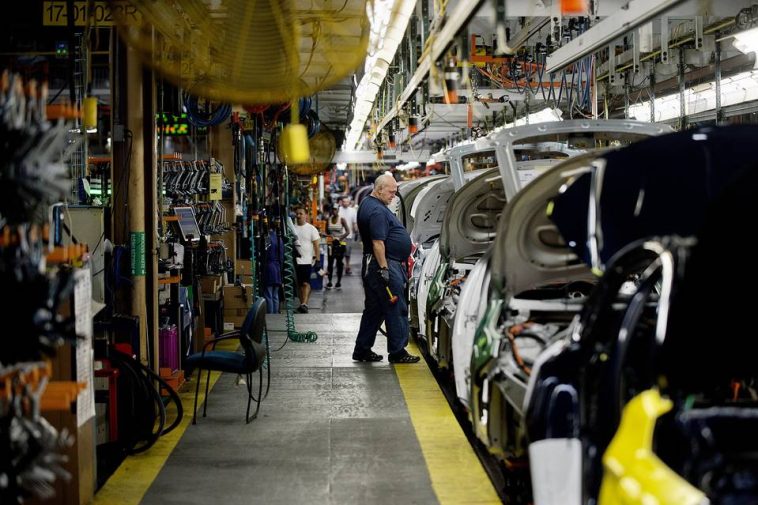
At the heart of the July industrial output downturn lies the manufacturing sector. Historically seen as the backbone of U.S. industrial production, manufacturers began the year riding high on robust pre-tariff orders and a post-strike boost in aircraft production at major companies such as Boeing. However, as the year progressed, the mix of cautious spending and diminishing orders has led to a plateau in this field. The engine of innovation has started to sputter amid the overwhelming tapestry of trade uncertainty and reduced capital spending.
This stagnant performance in manufacturing production is not necessarily a sign of a moribund industry, but rather a reflection of the many little twists in the economic narrative that are making growth efforts more challenging. Business leaders have had to factor in these subtle distinctions when planning their next moves, especially when faced with supply chain bottlenecks and uncertain international trade dynamics.
- Unchanged production in manufacturing highlights an undercurrent of caution.
- The surge at the beginning of the year was largely fueled by tariff-induced rush orders.
- Recent trends indicate that the industry is focusing on essentials and cautiously evaluating expansion plans.
Mining and Utilities: A Downward Slide
While manufacturing has experienced mixed signals, mining and utility sectors have continued their slow decline. The factors influencing these sectors are different in nature but share common threads with manufacturing—namely, diminishing demand and the challenges of economic headwinds. The drop of 0.4% in mining output and similar declines in utilities are a clear indication of broader economic pressures.
Mining, often seen as a bellwether for global industrial demand, is feeling the effects of subdued manufacturing activity. Meanwhile, utilities, which include an array of energy production and distribution activities, are wrestling with a re-prioritization of capital spending. Both sectors, therefore, serve as a warning signal for a potential broader slowdown if the trickier parts of the economic puzzle are not addressed systematically.
Capacity Utilization: Potential Versus Reality
How Factories Are Getting Around Their Limits
Capacity utilization – the percentage of potential output being employed – has traditionally been a muse for economists and policymakers alike. In July, factory capacity utilization edged down to 76.8%, a slow but significant slip. This decline is emblematic of the broader challenges facing U.S. industries, where even the best-run operations are struggling to maintain optimal levels of production amid a labyrinth of external pressures.
The drop in capacity utilization is not only a statistical anomaly. Instead, it provides crucial insights into how industries might perform going forward. As companies grapple with diminished orders and cautious capital spending in a cost-sensitive market, underutilized capacity becomes an increasing concern. Business leaders find their investments trapped in assets that are not currently fueling production, and the long-term indebtedness of these operations becomes a pressing worry.
Key Metrics in Industrial Production
| Category | Change | Insight |
|---|---|---|
| Total Industrial Production | -0.1% | A slight but important dip indicating overall softness in the economy. |
| Manufacturing | +0.0% | Shows balance but underscores the hesitation in expanding orders. |
| Motor Vehicles & Parts | -0.3% | A reflection of the complications in the auto sector. |
| Utilities | -0.2% | Decline tied to reduced capital investment and economic restraint. |
| Mining | -0.4% | Points to weakening demand in sectors dependent on heavy industrial activity. |
| Overall Capacity Utilization | 77.5% (factories: 76.8%) | Reflects the wasted potential in current industrial operations. |
Looking Forward: Retail Sales and Economic Indicators
Resilient Retail Sales: A Beacon in Tense Economic Times
Despite the decline in industrial production, consumer spending has been a bright spot. A separate report highlighted that July retail sales rose solidly—a reversal from prior monthly revisions that not only adds a twist to the economic narrative but also instills hope. This resilience in consumer behavior is super important as it provides a cushion that potentially could help lift manufacturing if economic policies adjust in a favorable direction.
This finding implies that while the engines of industrial production are slowing down, the wheels of the retail market are firmly in motion. For many businesses, especially SMEs and local manufacturers, sustained consumer spending is a must-have element when planning for the future. If retail growth continues, it might eventually stimulate increased production orders, helping companies recover from current output constraints.
Mixed Messages: Survey Data and Industry Feedback
The landscape of industrial output is also painted by varied industry survey data. For example, in New York state, a separate survey revealed that manufacturing activity expanded robustly, reaching its fastest pace since November. This improved sentiment, however, was counterbalanced by indications that capital spending intentions are softening and overall business optimism is gradually subsiding.
Such contradictory signals suggest that while some industry sectors are finding their way through the confusing bits of current challenges, others remain more cautious about expanding production or committing to new investments. The disparity between optimistic localized surveys and national-level production data exemplifies the twists and turns businesses must work through every day. This disjointed picture demands attention from decision-makers, urging them to factor in both immediate and long-term market realities.
Long-Term Outlook: Economic Conditions and Business Sentiments
External Factors and Their Impact on Future Growth
While current statistics provide a snapshot of the moment, the long-term outlook for U.S. industrial production remains intertwined with broader economic variables. Many experts point to the continuing effect of higher raw material costs, supply chain interruptions, and the uncertain play of international trade policies as significant influences on growth. These are not simple issues by any means—they are tangled issues that require business leaders to dig into the little details that could later sum up into major opportunities or risks.
When companies invest in production capacity, they must consider both the current output and the unpredictable external environment. For many industry players, this means adopting a cautious approach until the confusing bits of tariff policies and global economic tensions settle down. This balance of caution and innovation is key to ensuring that the industrial base can eventually thrive despite persistent headwinds.
Adapting to Rapid Changes: How Businesses are Managing Their Paths
Facing a mix of subdued industrial figures and robust consumer activity, businesses are striving to figure a path through these challenging economic conditions. Several manufacturing companies, for instance, are re-assessing their long-term capital investment, opting instead to reserve funds until the economic outlook becomes a bit clearer. Such prudence is evident across various sectors, where decision-makers are working through the rough patches by prioritizing essential spending over speculative investments.
Traditional industrial giants and smaller enterprises alike are investing in technology, automation, and other efficiency improvements—not always as a result of fresh growth in orders, but rather because these changes help them get around the limitations imposed by lower capacity utilization. In essence, enhancing productivity in the face of reduced output is a super important strategy, allowing for leaner operations even as overall revenues remain on the fringe of their potential.
Examining the Role of Trade Policy in Economic Shifts
Trade Policies: From Boosting Orders to Creating Hesitancy
This period of industrial stagnation is closely linked with trade policy issues. Early in the year, the looming presence of tariffs spurred companies to expand production as they rushed to finalize orders before the rulebook changed. However, as the policy impact wound down, so too did the burst of production. Now, with an environment that is as nerve-racking as it is unpredictable, manufacturers are revisiting their strategies.
Companies are no longer simply driven by the need to meet immediate order surges. Instead, they are now balancing the potential benefits of increased domestic production with the nerve-wracking outlook of continued international trade disputes and tariff uncertainties. This has created a scenario where businesses are more inclined to adopt a wait-and-see posture—a strategy that, while safer in the short term, might also slow down the momentum needed for long-term growth.
Managing Trade-Driven Cost Increases and Production Strategies
There is no denying that higher material costs imposed by tariffs have forced companies to re-strategize production lines, reassign budgets, and occasionally delay capital-intensive projects. This domino effect is felt more deeply in industries where raw material costs play a major role. With price surges and supply price uncertainties, businesses are getting into the twist and turns of cost management and efficiency enhancement.
- Material Cost Fluctuations: Tariffs have abruptly increased costs for key inputs, necessitating tighter cost-control measures.
- Revised Investment Strategies: Companies are more cautionary, focusing on short-term gains while holding off on large capital expenditures.
- Efficiency and Automation: With profitability under pressure, firms are investing in technological upgrades as a countermeasure.
It is in this intricate play between cost management and production strategy that businesses find themselves constantly on edge, pondering whether to take bold steps or to go slowly in mounting a recovery. The irony, however, remains that while such decisions are made at the executive level, they are deeply influenced by a mix of internal hesitations and external economic signals—a combination that is both confusing and challenging to unravel.
Investment Trends and the Future of Industrial Production
Capital Spending in a Time of Economic Uncertainty
The recent cooling in capital spending among manufacturers is another clear sign that the underlying concerns are more than just statistical anomalies. Companies are facing a tough decision: invest in modernizing and expanding production, or hold on to cash reserves until economic uncertainties subside. This trend of cautious spending is fundamentally reshaping the industrial landscape, as firms recalibrate their expectations to align more closely with current conditions.
It is key for investors and management teams to understand that a softening in capital investment is not necessarily a pessimistic forecast for the sector; rather, it represents a strategic move to preserve resources in uncertain times. In many respects, this shift is rational, as the costs associated with upgrading facilities or launching new projects become a heavier burden when future growth projections are unclear. Businesses trying to figure a path through this uncertain terrain are increasingly prioritizing flexibility over expansion.
- Risk Management: Companies are more appreciative of the need to reserve funds in anticipation of volatile market conditions.
- Technological Upgrades: Despite reduced capital spending, some key sectors are accelerating automation to maintain competitiveness.
- Long-Term vs. Short-Term Gains: Many firms are deliberately postponing long-term investments until there is greater economic clarity.
Understanding the Broader Implications for Future Growth
The current trends in industrial production, coupled with cautious capital investment and unpredictable trade policies, hint at a longer-term reevaluation of how the U.S. industrial sector may evolve in the coming years. Businesses, investors, and policymakers must get into the subtle parts of this transformation to fully appreciate the potential for growth and innovation. It is clear that we are at a crossroads—one where a blend of innovation and careful financial management could unlock a period of unprecedented efficiency, even if it means initially tempering expansion ambitions.
Rather than viewing the present as a period of mere slowdown, informed observers see an opportunity: a time to streamline operations, to invest in critical technologies that boost efficiency, and to patiently wait for the economy to balance out its many challenges. With a focus on core competencies and strategic innovation, the industry may very well be on the brink of a reenergized phase of growth, albeit one tempered by a healthy dose of caution and pragmatic decision-making.
Conclusion: Looking Toward Stability in a Changing Landscape
Summing Up the Current Industrial Outlook
In wrapping up our review of July’s industrial data, it becomes clear that the small dip in production is a symptom of wider, more complicated pieces at work. While manufacturing remains steady, the contrasting declines in mining and utilities, combined with less-than-robust capital spending, signal that U.S. industries continue to contend with a host of intertwined issues. From tricky bits in trade policy and tariff-induced cost pressures to uneven consumer spending and cautious capital investments, the landscape is as challenging as it is dynamic.
This period is, without a doubt, a nerve-racking time for many decision-makers. Still, it is also an opportunity for businesses to streamline operations, fine-tune strategies, and prepare for a time when economic confidence returns. The insights provided by the latest figures serve not as an alarm bell of impending doom but as a map highlighting where adjustments can be made—whether by investing in technology, restructuring supply chains, or rethinking marketing approaches to capture emerging consumer trends.
Looking Toward Stability and Recovery
The mixed signals emanating from recent industrial data remind us that the road to economic recovery is rarely linear. Instead, companies must work through these challenging bits by balancing short-term pressures against long-term strategies. With resilient retail sales offering a steady counterweight to industrial hesitancy, all eyes are now on how quickly manufacturing, mining, utilities, and associated sectors can adjust to these shifting conditions.
Business leaders are increasingly urged to find their way through these tricky parts by focusing on efficient technology upgrades, flexible investment strategies, and a renewed focus on core competencies. Even as external factors – from tariff tensions to evolving trade deals – continue to add unpredictable twists and turns to the economic narrative, there is cautious optimism that improved consumer confidence and targeted investments will help stabilize the landscape.
The rebalancing of industrial production against consumer demand is a fine shade that reminds us of the perennial dance between policy, market sentiment, and business action. For many in the field, this means not only accepting the current slowdowns but also using them as a catalyst for deeper, more essential reforms in production and supply chain management. In the end, the current period of hesitation and recalibration may set the stage for a more robust industrial future—one defined by adaptability, strategic insight, and a relentless pursuit of efficiency even in trying times.
Final Thoughts: Embracing Innovation Amid Uncertainty
As we take a closer look at the multifaceted story of July’s industrial production, the prevailing sentiment is one of cautious optimism. The modest dip in output, while notable, should not eclipse the underlying strengths that remain in the U.S. industrial base. With the interplay of resilient retail sales, strategic investments, and gradual innovations in manufacturing processes, there is every reason to believe that the sector can overcome its current hurdles.
Business leaders are now challenged to manage their way through this period with a blend of prudence and daring innovation. They must get around the complications of tariff policies, sort out the confusing bits of changing consumer demand, and adapt to a volatile international trade environment. The capacity utilization data, though a hint of lost potential, also call for a strategic rethinking of production methodologies that could usher in a new era of efficiency and growth.
In conclusion, while July’s report may have delivered a mixed message—a pause in production against a backdrop of vibrant consumer spending—it simultaneously opens up a space for thoughtful, strategic action. The industry is at a juncture where understanding the subtle details and making the right, timely investments can lead to a robust comeback. It is a reminder that even in times of economic uncertainty, with a practical and measured approach to innovation and cost management, growth is not only possible but well within reach.
As this evolving story continues, stakeholders across the board are watching closely, eager to see how manufacturing, mining, and utilities will respond over the coming months. In the interplay between external pressures and internal resilience, there lies both challenge and promise—one that could ultimately define the next chapter in the journey of U.S. industrial production.
Originally Post From https://www.ttnews.com/articles/industrial-output-dips
Read more about this topic at
Industrial Output Dips as Factories Grapple With Weak …
US industrial production dips, undermining dollar’s strength