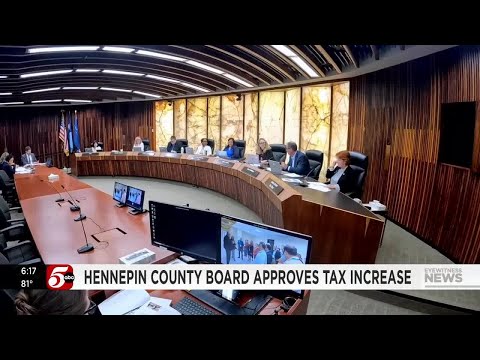

Hennepin County’s Tax Levy Increase: A Closer Look at Its Implications
The recent decision by the Hennepin County Board of Commissioners to approve a nearly 7.8% tax levy increase for 2026 has ignited debates in economic circles and among local residents alike. As a seasoned observer of local government actions and economic trends, I find this move both intriguing and worrisome. On one hand, the need to generate new revenue in an environment full of problems—marked by inflation, federal and state budget cuts, and scheduled union contract raises—is clear. On the other, the impact on property owners and taxpayers adds twists and turns that call for a closer look at how these changes affect the overall business climate and everyday living expenses.
Impact on Property Owners: Detailed Breakdown of Tax Increases
One of the most immediate effects of the proposed levy increase is its impact on property owners. For a median-value home appraised at around $400,900, residents can expect an extra cost of approximately $125. In tangible terms, this means that the property tax bill could rise to nearly $1,600 annually, placing an extra burden on homeowners already grappling with rising living expenses.
This change raises several questions for those who own homes in the area. How will this adjustment affect household budgets? Is the additional revenue allocation sufficient to justify this cost? Many property owners find themselves in a position where they must balance the benefits of improved county services with the immediate, tangible cost increases. Here are some key aspects to consider:
- Escalating Home Costs: Many homeowners are already dealing with home prices that have skyrocketed, and now the tax bill adds a further financial twist.
- Service Improvements: County officials point to the additional funds as critical for enhancing services in Law, Safety and Justice departments, funding debt service, and covering costs for the upcoming 2026 election.
- Budgeting Concerns: As property taxes form roughly 36% of Hennepin County’s total budget, homeowners might wonder if there are alternative revenue sources that could eventually relieve this burden.
A table summarizing the estimated cost increases might be helpful for easy reference:
| Property Value | Additional Levy | Total Expected Tax Bill |
|---|---|---|
| $400,900 (Median) | + $125 | Approximately $1,600 |
This snapshot of numbers reinforces the idea that every dollar added to the tax bill directly influences household financial plans. For many, these are confusing bits in the broader picture of public finance—twisted by economic forces beyond local control.
Budgeting in a Time of Inflation and Cuts: Grappling with the Financial Puzzle
At the heart of this levy increase is a budget worth $3.09 billion for 2026—a figure reached after considerable discussion amongst county decision makers. The board faced a tricky set of choices: how do you fund critical services amid escalating costs and diminishing federal and state support? The answer, at least for now, seems to lie in continuing to lean on property taxes as a primary tool for revenue generation.
This situation presents several tangles and turns for local administrators. The county is not operating in isolation; it is navigating through a climate where inflation pushes costs higher while federal and state contributions diminish. Such developments create a financial puzzle laden with challenges, including:
- Union Contract Raises: Scheduled increases in union salaries mean that operating costs will continue to climb, necessitating a steady revenue stream.
- Inflationary Pressures: As the cost of living increases, every department is feeling the pinch, prompting budget adjustments that require additional sums to maintain service quality.
- Federal and State Cuts: With significant cuts from higher levels of government, counties are left to find their own financial footing, leading to decisions like this levy increase.
This complex financial scenario calls for county officials to dig into the fine points of budget management. They must figure a path through a set of confusing bits where each decision carries both short-term benefits and potential long-term drawbacks. As the county balances its books, it becomes clear that relying solely on property taxes is not a sustainable strategy for the future, even if it is the most straightforward option right now.
Exploring New Revenue Avenues: The Need for Sustainable Funding
Hennepin County officials, including Commissioner Angela Conley, have highlighted the necessity of looking into alternative revenue sources. With the current model heavily reliant on property taxes—over a third of the county’s budget—the need for diversification is both essential and increasingly important for long-term stability.
As we poke around the issue, several possible revenue avenues emerge:
- Service Consolidation: Exploring areas where there may be duplicated efforts can potentially reduce costs, allowing existing funds to be used more efficiently.
- Partnership Models: Collaborating with local businesses and even neighboring jurisdictions on infrastructure projects might open up new sources of funds and shared benefits.
- Innovation in Public Funding: Emerging models, such as public-private partnerships or targeted bond issues for specific projects, could provide the county more breathing room without overburdening property owners.
- Reassessing Budget Priorities: With several departments holding strong budgets, it might be prudent to review and prioritize spending to ensure that the most crucial services are adequately funded without unnecessary overlap.
These options not only promise a more balanced approach but also underscore the county’s commitment to sustainability. Looking beyond property taxes might help to ease the nerve-racking pressure on residents and provide a blueprint for other counties facing similar challenges.
The conversation about revenue diversification is more than just a local debate. It reflects a broader trend that many municipalities across the country are experiencing—balancing the need to fund essential services while not overburdening residents with rising costs. For now, the public hearings and further discussions at the county level will play a crucial role in shaping the future of local fiscal policy, offering an opportunity to take a closer look at every possible funding detail.
Balancing Public Services and Safety Expenses: A Look at Critical Investments
The additional $81.5 million in revenue raised by the proposed tax levy increase is earmarked for several key areas, including a $33.8 million allocation for the Law, Safety, and Justice departments. Public safety is one of the county’s top priorities, but financing these efforts presents its own set of tricky parts.
While county officials argue that these investments are super important for maintaining social order and ensuring that public services are ready to face today’s challenges, residents remain wary about their long-term effects on the overall tax structure. The extra funds are intended to cover not just routine operations but also the unpredictable expenses that come with drastic service needs and emergency public safety measures.
Below is a summary of the key areas that stand to benefit from the revenue increase:
| Department/Area | Planned Investment | Purpose |
|---|---|---|
| Law, Safety & Justice | $33.8 million | Enhance emergency services and public safety operations |
| Debt Service | $21 million | Manage existing and future debt obligations |
| Election Funding | Allocated in budget | Ensure smooth functioning of the 2026 election process |
These investments are designed to address several small distinctions and hidden issues within county operations. One must consider whether this shift in resource allocation will be enough to justify the direct costs borne by taxpayers. Although enhanced public safety measures are a decisive necessity, there is an underlying tension among residents about constantly rising taxes without alternative revenue methods taking center stage.
The balancing act is a real challenge. County officials need to find a way to figure a path that supports critical investments without leaving homeowners and businesses feeling overwhelmed by ongoing cost hikes. This task involves not only ensuring that essential services remain robust but also that public confidence in county spending remains intact.
Community Concerns and Public Sentiment: A Closer Look at What Homeowners Say
Public opinion is a mixed bag when it comes to the proposed tax levy increase. Many residents express understandable concerns—after all, the cost of everyday items like groceries continues to climb, and now property taxes are joining the list of increasing expenses. A Minneapolis resident, Julie Hudak, encapsulated the community’s frustrations, remarking, “Where does it stop? How do we change it? Everything is continuing to go up.”
Such sentiments are common in communities that face constant financial pressure. Here are some of the main points of contention expressed by homeowners:
- Cost of Living: Rising expenses across the board—from food prices to utility bills—put added pressure on household budgets, making even a modest tax increase feel burdensome.
- Value Versus Cost: While many homeowners enjoy significant increases in property values (with some properties seeing values five times over initial purchase prices), the direct correlation between rising values and higher taxes has raised questions about fairness.
- Lack of Immediate Alternatives: Many residents are eager to see the county explore other funding mechanisms rather than defaulting to incremental property tax hikes. They argue that finding your way through the tangled issues of county finance requires innovative solutions beyond the traditional tax model.
- Skepticism About Long-Term Benefits: There is an air of cautious optimism tempered by realism. While improved public services are welcome, homeowners are left wondering if this approach will be effective over the long haul or merely a temporary fix.
These points illustrate the tension and small distinctions in public sentiment. For some residents, the increase is viewed as a necessary evil in light of cuts to federal and state funding. For others, it represents a slippery slope where essential home economics are directly impacted by decisions made far removed from the immediate community.
Future Projections: What Public Hearings and Ongoing Debates May Bring
As it stands, the 7.79% tax levy increase is not set in stone. The county has scheduled months of public hearings where various agencies and interest groups will get into the nitty-gritty of their budgetary needs. A vote on the budget is expected in December, and this process will likely be as nerve-racking as it is critical for shaping future fiscal policies.
The upcoming hearings offer several opportunities for a more open discussion on the county’s fiscal strategies, including:
- Detailed Examinations of Departmental Budgets: Stakeholders will have a chance to poke around the detailed budgets of each department, looking into the fine points of operations and spending.
- Opportunities for Community Input: Public participation is essential in ensuring that decisions reflect local needs. These sessions may uncover subtle details that have been overlooked by decision-makers.
- Exploring Alternative Funding Solutions: As discussed earlier, the possibility of diversifying revenue streams is on everyone’s mind. Public hearings will be a critical venue for discussing new ideas and potential partnerships.
The proceedings are likely to address a number of pressing questions, such as:
- How can the county better figure a path through the challenges posed by ongoing inflation and budget cuts?
- What tangible steps can be taken to reduce the reliance on property taxes in the longer term?
- In what ways will the additional funds be allocated to ensure that essential services receive adequate support without overextending other parts of the county budget?
These queries illustrate the many delicate twists involved in balancing fiscal responsibility with residents’ needs. They also highlight the ongoing nature of the discussion, which will evolve as more detailed financial reviews and community perspectives are brought to the table. In this vein, the future projections of Hennepin County’s financial landscape remain loaded with questions and potential changes.
Economic Ramifications for Local Businesses and the Broader Community
While much of the discussion centers on individual homeowners and county services, local businesses also face significant implications from this tax decision. Small businesses are particularly sensitive to changes in local taxation and budget allocations, and decisions of this magnitude can affect the broader local economy in several direct and indirect ways.
Here are some of the main effects to consider:
- Consumer Spending: With an increase in property taxes, residents may have less disposable income for discretionary spending, potentially affecting retail and service industries.
- Business Confidence: A consistently rising tax environment can make it trickier for businesses to plan for the future. Even stable sectors may find themselves navigating through unexpected cost increases, which could influence hiring decisions and expansion plans.
- Local Economic Growth: A robust local economy depends on a balance between public revenue and consumer spending. If taxpayers feel the strain, it could slow down the overall economic momentum in the region.
- Investment in Infrastructure: On the bright side, additional funds may also translate into better infrastructure, improved public safety, and enhanced government services, all of which can create a more attractive business environment in the long run.
For industrial manufacturers and automotive businesses, the stakes are equally high. Even though these sectors often have broader operational budgets, local economic health directly influences supply chains and local market conditions. The trick is finding your way through these financial twists without significantly hampering innovation and operational efficiency.
To sum up, while the direct effect on business tax laws might not be as apparent, the ripple effects of higher property taxes are felt throughout the local economic ecosystem. This, in turn, has the potential to alter consumer behavior, adjust business strategies, and ultimately reshape the local market in subtle but significant ways.
Ensuring Long-Term Fiscal Health: The Bigger Picture
From a strategic standpoint, the tax levy increase highlights a broader challenge facing many local governments today. While immediate revenue needs are pressing, long-term fiscal sustainability requires ongoing innovation in public finance. County decision-makers find themselves walking a tightrope, balancing addressable operational costs with the public’s readiness to shoulder further tax burdens.
Here are several key factors that will determine whether current measures lead to a sustainable financial future:
- Budget Flexibility: The ability to adjust spending in response to changing economic conditions is essential. This means continually reassessing budgets to find creative cost-saving measures.
- Exploring New Revenue Streams: As discussed earlier, diversifying funding sources is not only a desirable long-term goal, but a necessary one in today’s environment full of problems.
- Maintaining Transparency: Continued clear communication between county officials and residents will be key. When people understand where every dollar is going, the trade-offs become less overwhelming.
- Community Engagement: Incorporating feedback from taxpayers during public hearings is crucial. Active engagement can help ensure that strategies not only address fiscal needs but are also sensitive to community concerns.
Looking ahead, it will be interesting to see whether Hennepin County can steer through these challenges with a combination of solid fiscal management and innovative revenue strategies. The debate over property tax reliance versus exploring fresh sources of funding remains central to discussions about long-term economic health in the region. Every strategic decision made now will have subtle long-lasting impacts on how residents and businesses manage future costs and navigate a financially loaded landscape.
Community Voices and a Call for Greater Financial Innovation
The voices of local residents, like that of Julie Hudak, remind us that behind every line in the budget and every percentage point in the tax levy increase, there are real people making tough financial trade-offs. For many, living in a community with escalating tax costs—coupled with rising prices in everyday goods and services—can seem overwhelming. Yet, these challenges also present an opportunity to explore a smarter, more balanced approach to local government finance.
Countless examples across the nation show that successful financial reform often requires stepping back to look at the bigger picture. Instead of being chained to old models, local governments that take a closer look at every possible revenue detail can often unearth new ideas that reduce reliance on one single taxing source.
- Public-Private Partnerships: Engaging with local industries might offer dual benefits by channeling private investment into public projects, thereby lessening the pressure on residential taxpayers.
- Service Consolidation: By merging duplicate services across county departments, funds can be reallocated more effectively, ensuring that each department operates with fewer confusing bits and more streamlined efficiency.
- Modernized Taxation Strategies: Leveraging technology to optimize tax collection and transparency can lead to a fairer distribution of the tax burden among residents, while also improving public trust in government spending.
These approaches are not without their challenges. Each idea comes with its own set of complicated pieces that require careful planning and widespread community support. However, in a landscape where conventional methods are increasingly proving to be insufficient, innovative practices might hold the key to long-term financial resilience.
There is no easy answer to balancing immediate fiscal needs with ongoing financial sustainability. The current levy increase is a reaction to pressing budget gaps in the face of external cuts and rising costs. Yet, it also serves as a wake-up call—a signal that public finance strategies must evolve to avoid tipping scenarios that put undue pressure on homeowners and local businesses.
Looking Ahead: Strategic Steps for a Resilient Fiscal Future
In the coming months, as public hearings unfold and county officials work through the tangled issues of their expansive budget, it will be critical for all stakeholders to remain engaged and proactive. Some strategic steps that could pave the way for a more balanced fiscal framework include:
- Enhanced Financial Planning: Ensuring that budget forecasts incorporate long-term trends rather than short-term fixes can help build resilience against future shocks.
- Collaboration Across Departments: Breaking down silos and encouraging joint initiatives among county departments might uncover hidden efficiencies, reducing reliance on a single revenue source.
- Regular Stakeholder Forums: Hosting community and business forums to gather input can help decision-makers tap into a broader pool of ideas and ensure that the public’s voice is truly heard.
- Investment in Technology: Modern tools can assist in streamlining tax collection and public budgeting, making the process less intimidating for residents and more efficient for officials.
Such measures are not just theoretical; many counties and municipalities have successfully managed their way through similar challenges by adopting a more holistic, innovative approach to their fiscal policies. As local governments around the nation face similar economic pressures, the experience of Hennepin County may serve as a blueprint—both cautionary and inspirational—for others seeking new paths forward in public finance.
Conclusion: Balancing Fiscal Realities with Community Well-Being
Hennepin County’s decision to increase the tax levy by nearly 7.8% for 2026 paints a picture of a local government at a crossroads. On one hand, it is grappling with challenging external forces such as inflation and state-level budget reductions. On the other, it faces the daunting task of maintaining essential public services in a manner that residents can financially tolerate.
This opinion editorial is not meant to offer a definitive answer but rather to serve as an invitation to both officials and community members to take a closer look at every facet of the issue. We must all work together to figure a path through these tangled issues—exploring innovative revenue avenues, reassessing budget priorities, and ensuring that our local government remains both effective and fair.
In the end, the debate over the levy increase encapsulates the broader challenge of how communities can balance the immediate demands of a rising cost of living with the need for long-term fiscal sustainability. Whether through public hearings, revised budgeting strategies, or creative funding methods, the coming months will reveal much about the future direction of Hennepin County’s financial planning.
As stakeholders continue to sort out this complex puzzle, it is clear that the decisions made today will not only affect the next fiscal year but also set the stage for how residents, businesses, and local government together manage the intricate balance of resource allocation in the years ahead.
Ultimately, while the extra tax dollars may momentarily feel like an extra burden on already stretched household budgets, they also present an opportunity—a chance to rethink, reinvent, and reform the way public services are funded. In times of rapid economic change, it is incumbent upon all of us to steer through these challenges with a clear-eyed view of both the immediate financial responsibilities and the long-term health of our community.
Originally Post From https://kstp.com/kstp-news/top-news/hennepin-county-approves-7-8-tax-levy-increase-for-2026/
Read more about this topic at
Hennepin County approves 7.79% maximum levy hike for …
Hennepin County approves 7.8% tax levy increase for 2026