Industry 5.0: Bringing People Back to the Forefront of Modern Manufacturing
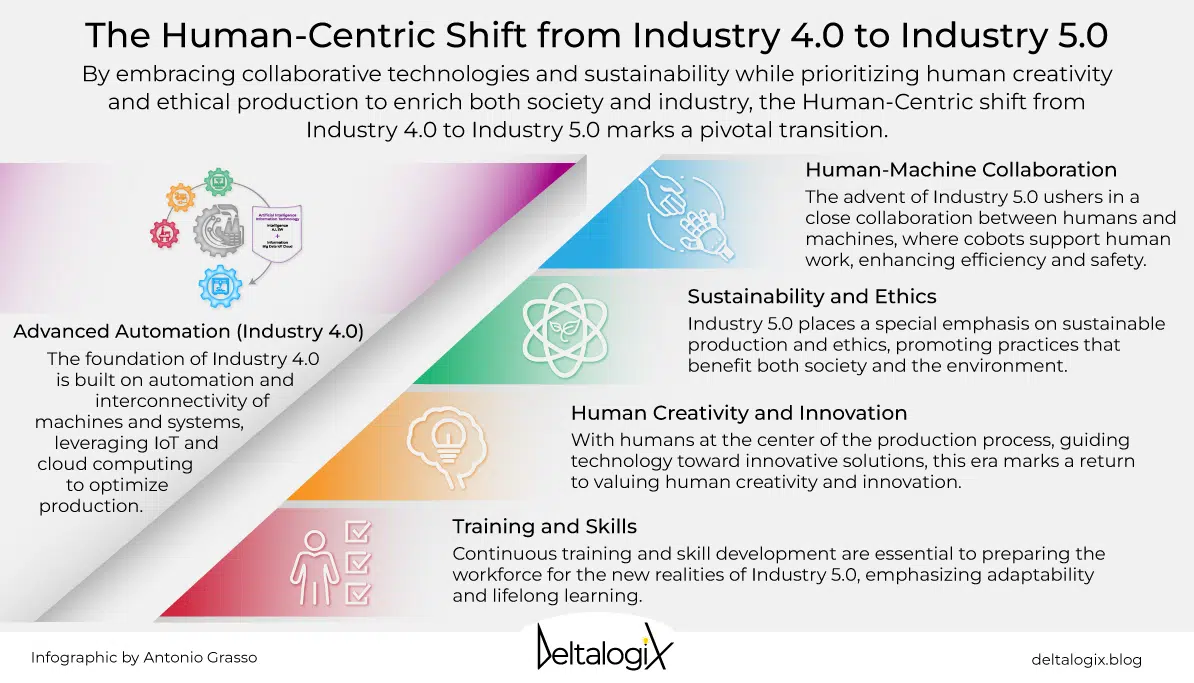
The manufacturing landscape has undergone a dramatic shift over the past decade. In the early days of Industry 4.0, technology was celebrated as the ultimate game-changer. While the tech-driven revolution introduced machine learning, data-driven decision models, and automated processes to manufacturing, it often left the human element by the wayside. As manufacturing companies around the world embraced advanced connectivity and automation, the focus on workers and their creative input was gradually lost. The emergence of Industry 5.0 is a call to bring people back into the loop—a shift towards human-led innovation that has become both essential and timely.
In today’s fast-changing business environment, makers, suppliers, and leaders must reexamine the balance between technology and human ingenuity. Industry 5.0 offers a chance to address the tricky parts of an imbalanced focus, transforming a process loaded with issues into a system where employee well-being and creative problem-solving are prioritized. This move toward a more human-centric industry in manufacturing reflects wider economic trends and the need for companies to adapt quickly to the evolving landscape.
Industry 4.0: The Tech-Driven Revolution and Its Limits
Industry 4.0 was heralded as a breakthrough for industrial manufacturing, with its promise of connecting machines, leveraging big data, and deploying automation at unprecedented scales. However, many in the manufacturing arena now recognize that technology’s rapid ascendancy came with some unintended consequences. As companies raced to optimize productivity and efficiency using advanced systems, human factors were often overlooked.
Technological advancements brought with them complicated pieces—tangled issues that made it hard for many workers to adjust. With rigid systems in place, the creative and flexible aspects of human work were suppressed. The result has been a workforce that, in many cases, feels both burned out and disengaged. Let’s break down some of the confusing bits associated with Industry 4.0:
- Rigid Processes: Systems designed for maximum efficiency rarely provided the flexibility needed to address subtle parts of on-the-ground issues.
- Data Overload: With massive amounts of information being collected, analyzing and acting on these insights often became nerve-racking and overwhelming for those on the floor.
- Pressure for Productivity: An overriding focus on increasing output sometimes meant that the well-being of the workforce took a back seat.
While Industry 4.0 introduced certain advantages, many have come to see that the human element was inadvertently sidelined in the process. The lack of emphasis on people has spurred the shift towards Industry 5.0, which advocates for a more balanced approach that harnesses technological prowess alongside human creativity and ingenuity.
Industry 5.0: Embracing Human-Centric Innovation
Industry 5.0 is not about discarding technology. Instead, it’s a progressive refinement—a way to integrate technology with the human touch. Unlike its predecessor, which placed almost exclusive importance on automated processes and data analysis, Industry 5.0 recognizes that every manufacturing operation is only as strong as the people behind it.
Industry expert Sarah Tilkens, formerly a lean guru with GE Healthcare and now the force behind the KPI Lab, has been a vocal advocate for this shift. In her discussions with well-known business journals, Tilkens has pointed out that when systems become too rigid, they stifle creativity and lead to employee burnout. Rather than forcing individuals into roles where they are merely part of a machine, Industry 5.0 promotes a work environment where human-led innovation is not only encouraged but seen as super important to overall success.
Why Human-Centric Manufacturing Matters
There are several reasons why many now argue that human-centric manufacturing is key to a prosperous industrial future:
- Boosting Creativity: When workers are trusted to lead innovation, they can come up with creative solutions to tricky parts, often finding workarounds for problems that automated systems cannot handle.
- Enhanced Employee Engagement: Fostering a human-centric culture helps alleviate off-putting burnout and disengagement—common issues in environments strictly ruled by data and metrics.
- Adapting to Market Changes: Employees who are engaged in decision-making bring fine shades and subtle details into planning processes, which can prove critical when the industry faces unexpected twists and turns.
- Human-Machine Collaboration: Marrying the advantages of advanced analytics with the unique problem-solving skills of humans can lead to the development of dynamic production processes.
By combining the strengths of data-driven insights with the energy and responsiveness of a motivated workforce, Industry 5.0 aims to create an environment where learning, adaptability, and creativity are not only super important but are seamlessly integrated into the manufacturing process.
From Automation to Human Empowerment: Evolving Business Practices
In the current industrial landscape, companies in sectors such as automotive, electric vehicles, and industrial manufacturing are increasingly realizing that while systems can perform repetitive tasks at impressive speeds, the human mind is responsible for innovation and problem-solving. The key is to find the right balance—a fusion of technology with the human ability to think outside the box.
Many established companies are now taking a closer look at how they allocate responsibilities. Instead of over-relying on restrictive automation protocols, business leaders are increasingly adopting strategies that empower teams to leverage their collective insight. This change is especially noticeable in small businesses where the impact of human creativity often plays an even larger role. These firms understand that when the workforce actively contributes to process improvement, the overall company culture transforms, making daily challenges feel less intimidating.
Defining a Clear Path Towards Human-Centric Operations
As the shift towards Industry 5.0 gains momentum, many business leaders are asking: How can we best support this transition while maintaining the efficiencies of modern manufacturing? The answer lies in developing frameworks that integrate advanced technology without sidelining the employees who are at the core of every successful operation. Here are some of the critical aspects to consider:
- Investing in Ongoing Training: Companies need to create programs that allow workers to get into new technologies and learn how to manage them effectively. This means investing time and resources into continuous education and skill development.
- Redesigning Processes: Rather than forcing employees into fixed roles defined by rigid systems, businesses can design processes that allow for more flexibility. This gives employees the space they need to solve problems using both data and creativity.
- Promoting Collaborative Decision-Making: Management should encourage a culture of collaboration where workers are free to provide feedback and suggest improvements. This can pave the way for more agile production methods.
- Integrating Human Feedback Loops: Establishing mechanisms for continuous input from workers can help refine processes over time. Regular reviews and open communication channels are key to ensuring that technology serves as a tool for empowerment rather than a draconian measure of productivity.
These strategies are not only applicable to heavy industrial manufacturing but also to adjacent sectors like electric vehicles and general automotive production. By prioritizing people, companies are better positioned to tackle the nervous twists and turns that come with rapid market changes and technological evolution.
Small Suppliers in a Changing Industrial Landscape
Small suppliers form the backbone of many manufacturing ecosystems. Yet, in the wake of a technology-centered shift like Industry 4.0, these enterprises often find themselves exposed to an environment that is both intimidating and overwhelming. With limited resources, small businesses must contend with the added nerve-racking task of integrating new systems while staying true to their unique value proposition.
The implementation of advanced technological systems is loaded with issues for small suppliers. They face not only the pressure to keep up but also the daunting responsibility of aligning cutting-edge technology with the everyday needs of their workforce. Here are some of the main tricky parts small suppliers encounter:
- Resource Constraints: Small businesses frequently struggle to invest heavily in new technology due to limited financial and human resources.
- Integration Challenges: Merging traditional processes with modern digital tools can be a tangled issue, requiring both strategic planning and hands-on management.
- Maintaining Employee Morale: With the rapid adoption of technology, the risk of burnout increases if the human side of the operation is neglected entirely.
- Market Pressure: Small suppliers operate in a competitive space where even slight efficiency gains from rival companies can put them at a disadvantage if they are not able to adapt quickly.
However, Industry 5.0 opens up new avenues for these smaller suppliers. By enabling human-led innovation, companies of all sizes can foster a working environment where employee creativity and flexible problem-solving are at the heart of the process. This approach not only mitigates the intimidating challenges of integrating advanced technology but helps build a more sustainable, engaged, and agile workforce.
Case Study: How Small Businesses Can Thrive with Industry 5.0
Consider a small supplier in the automotive parts industry. Traditionally, this company might have relied on rigid automated systems to streamline operations—systems that often did not account for on-the-ground feedback from workers. Transitioning to an Industry 5.0 model, the company restructured its workflow to include regular brainstorming sessions, employee-led innovation projects, and adaptable work processes.
| Challenge | Traditional Approach | Industry 5.0 Strategy |
|---|---|---|
| Process Rigidity | Fixed procedures with little room for change | Adaption through regular team meetings and feedback loops |
| Employee Burnout | High-pressure production quotas with minimal input | Inclusive decision-making that values creative solutions |
| Resource Limitations | Heavy reliance on expensive, high-tech upgrades | Leveraging existing tools with tech upgrades focused on ease-of-use |
This example illustrates that by easing the intimidating pressure of technology-centric operations, small suppliers can create an environment where every employee has a stake in success. Empowering people in this way not only improves operational efficiency but nurtures a resilient, innovative team ready to tackle any challenge.
Automotive and Electric Vehicle Manufacturing: Driving Innovation Forward
In the rapidly evolving automotive and electric vehicle sectors, the interplay between advanced manufacturing technologies and human creativity is more critical than ever. Automotive companies have long been leaders in integrating technology into production lines. However, with the surge in electric vehicle demand and rapid technological advancements, companies are facing new, intricate pieces of the supply chain that require a sensitive human touch.
Electric vehicle manufacturing, in particular, calls for a delicate balance between data-driven optimization and creative problem-solving to meet stringent quality and safety standards. When workers are seen merely as cogs in a machine, there’s a risk of missing out on those fine points that only human experience can provide. Industry 5.0 encourages automotive manufacturers to actively involve production teams in the development process, ensuring that every output is both efficient and innovative.
Strategies for Merging Technology and Human Insight in Electric Vehicle Production
To truly benefit from the advancements in electric vehicle manufacturing, companies must find a path that allows for both technical upgrades and human oversight. Here are some nuanced strategies to consider:
- Emphasize Collaborative Design: Involve cross-functional teams from the earliest stages of product development. This helps blend computer-aided designs with practical insights that can smooth out the overall process.
- Implement Adaptive Maintenance Systems: Use data monitoring alongside worker feedback so that any issues in the production line can be quickly identified and remedied, reducing machine downtime and worker frustration.
- Continuous Training & Upskilling: Regularly update training modules to ensure that employees are comfortable with both new tools and innovative techniques. This dual approach nurtures an environment where technology enhances rather than replaces human skills.
- Foster Agile Production Practices: Instead of rigid production lines, use agile methods that allow for small adjustments based on real-time observations. This helps in managing sudden shifts in demand or quality control.
The electric vehicle industry thus benefits immensely when technology and human insights work together. Drivers of innovation in this sector are grounded not only in cutting-edge tech but also in the hands-on experiences of production specialists. This synergy paves the way for products that are both reliable and market-ready.
Addressing Cybersecurity in the Production Pulse Era
As manufacturing becomes more connected and reliant on digital networks, the issue of cybersecurity looms large. With increased data collection comes the heightened risk of cyber intrusions—a reality that adds another layer of intimidating complexity for industrial companies. In today’s hyper-connected world, safeguarding intellectual property and operational data is both critical and nerve-racking.
Industry leaders are now taking the necessary steps to figure a path through these tricky parts by implementing a range of rigorous cybersecurity measures. This is especially vital in the context of Industry 5.0, where human-led innovation intersects with the most advanced digital tools. It is no longer enough to simply digitize production systems; security protocols must go hand in hand with operational advancements.
Five Tactics for Tackling Heightened Cyber Risks in Manufacturing
Given the full-of-problems landscape of modern cybersecurity, here are five practical tactics that manufacturing leaders can consider to protect their operations:
- Regular System Audits: Conduct frequent reviews of all digital interfaces to ensure there are no weaknesses that malicious parties could exploit.
- Employee Cybersecurity Training: Provide hands-on sessions that help employees understand the subtle details of cybersecurity protocols, ensuring that they are not the weak link in the chain.
- Multi-Factor Authentication Systems: Implement layered security measures that make it more difficult for unauthorized users to gain access.
- Real-Time Network Monitoring: Utilize tools that continuously scan network activity, allowing for a quick response to any unusual patterns that might indicate an intrusion.
- Collaboration with Cyber Experts: Work closely with security professionals who can offer insights into the latest threats and help update systems accordingly.
This multi-pronged approach is designed to reduce the chances of data breaches while letting the manufacturing process remain agile and responsive. By investing in robust cybersecurity measures, companies safeguard not only their technological infrastructure but also the ideas and innovations that their people contribute every day.
Economic Trends: The Wider Impact of Human-Centric Innovations
The move towards Industry 5.0 is not merely a technical upgrade—it is a fundamental rethinking of how manufacturing fits into the broader economy. As small business owners, industrial manufacturers, and even automotive companies begin to place a greater emphasis on people, economic trends start to shift. A focus on human innovation has the potential to boost productivity while also enhancing employee morale, leading to more sustainable growth in an ever-competitive global market.
The broader economic implications of Industry 5.0 include:
- Increased Consumers’ Confidence: When companies show that they invest in their people as much as in technology, trust in the brand grows, improving overall market sentiment.
- Enhanced Workforce Retention: Employees are less likely to leave environments where they feel valued and empowered—a key factor, especially during periods of economic uncertainty.
- Boosted Innovation Rates: The integration of human creativity into the production process drives novel solutions that can lead to more efficient manufacturing practices.
- Improved Supplier Relationships: A culture of human-centric innovation often spills over to small suppliers and partners, creating a more collaborative and resilient supply chain.
- More Robust Economic Policies: With the spotlight on human involvement, policymakers may develop regulations and tax laws that support innovation and protect workers’ rights in an increasingly digital world.
These trends encourage a rethinking of existing business tax laws and economic policies to better accommodate the dynamic interplay between technology and human skills. Welcome changes in the legal and policy arena can create a more supportive environment for innovation, turning challenges into opportunities for growth and improved competitive edge.
Marketing and Leadership Insights in the Age of Industry 5.0
Marketing strategies and leadership tactics are also evolving under the influence of Industry 5.0. As companies strive to capture a market that values both innovation and craftsmanship, leaders must be adept at both steering technological change and nurturing the creative potential of their teams.
Modern management practices often involve balancing a host of confusing bits—from meeting short-term production targets to planning for long-term strategic innovation. In this context, leaders who can manage their way through both tech-driven demands and human needs become super important assets. Here are some subtle parts of the approach:
- Inclusive Leadership: Good leaders are those who create a setting where every team member can voice ideas and contribute to the larger strategy. Open-floor discussions and encouragement to take the wheel foster an environment where innovation thrives.
- Data-Informed Decisions with a Human Touch: While data remains a key component of decision-making, it must be combined with the insights gained from real-world experiences. Leaders who blend analytical thinking with empathy can transform production processes into flexible, responsive systems.
- Embracing Local and Global Perspectives: As manufacturing operations become more integrated with worldwide supply chains, it becomes essential to consider both local workforce needs and global economic trends. This dual perspective ensures that innovations are relevant and effective across different markets.
- Brand Identity Reinvention: Companies that show they are committed to the human side of production can reinvigorate their brand image. Marketing campaigns that emphasize innovation fueled by real people immediately resonate with audiences who seek authenticity and reliability.
Leaders in manufacturing not only have to invest in advanced technology but also in training sessions and mentoring programs that boost their employees’ confidence. They are finding creative ways to bridge the gap between the in-depth, data-driven world of Industry 4.0 and a new era where human creativity is again placed center stage. The result is an evolved leadership model that is as inspiring as it is efficient.
Future Outlook: The Road Ahead for Manufacturing and Beyond
Looking forward, the shift towards Industry 5.0 promises to reshape how we think about manufacturing, supply chains, and even economic policies. The fusion of technology with human ingenuity is driving a new wave of innovation that extends beyond production lines into environmental sustainability, urban planning, and beyond. As electric vehicle production scales up and small suppliers adjust to new demands, the entire ecosystem stands to benefit from policies and practices that empower people.
Critically, this new model also impacts the broader ecosystem of tech-enhanced industries. For example, the automotive and electric vehicle sectors continue to integrate the latest developments in digital connectivity and cybersecurity while drawing on the creative talents of their workforce. In doing so, these industries provide a blueprint for how businesses can work through convoluted bits of modern challenges without sacrificing the human spirit that powers innovation.
Economic analysts suggest that companies embracing human-centric methodologies may eventually see improved efficiency and lower production costs, despite the initial challenges posed by transition periods. Furthermore, as policy frameworks evolve—addressing everything from business tax laws to labor rights—the market will increasingly favor companies that are able to balance the advantages of automated precision with the creativity and flexibility of human input.
Key Considerations for Future Success
For companies planning to make the most of Industry 5.0, several key areas must be prioritized:
- Investment in Human Capital: Allocating resources to employee development and training is a must-have for fostering a creative and agile workforce.
- Robust Technology Infrastructure: While technology is no longer the sole focus, maintaining a solid IT backbone ensures that data-driven decisions continue to support human-led innovations.
- Collaborative Ecosystems: Building partnerships with small suppliers, academic institutions, and research organizations can broaden the base of innovation and mitigate resource constraints.
- Responsive Policy and Regulation: Engagement with policymakers can help craft regulations that support a balanced approach to technology and human input in manufacturing and beyond.
As the future unfolds, the road ahead for manufacturing will likely be marked by both exciting opportunities and challenging twists and turns. Nevertheless, the consensus among industry experts is clear: the fusion of technological precision with human wisdom is not only a viable path forward—it is the path to a more dynamic, resilient, and innovative industrial future.
Conclusion: A New Era of Collaborative Innovation
The evolution from Industry 4.0 to Industry 5.0 represents much more than a technological upgrade. It is a profound shift towards valuing the human spirit in an arena once dominated by rigid machines and data algorithms. By empowering employees, small suppliers, and even leaders with the freedom to innovate, the entire manufacturing ecosystem can transform in ways that are both sustainable and market-relevant.
This redefined approach emphasizes the importance of getting into the fine points of creativity, collaborative decision-making, and operational flexibility. It serves as a reminder that no matter how advanced technology becomes, the hidden complexities of manufacturing—those subtle parts only human experience can address—remain at the heart of innovation.
In an industry characterized by complicated pieces and nerve-racking shifts, the promise of Industry 5.0 is a testament to the fact that human ingenuity is the key driver for sustained growth and competitive advantage. As companies continue their journey towards this human-centric model, they not only improve efficiency and reduce burnout but also create a future where technology and people work side by side, driving progress together.
Ultimately, the call for Industry 5.0 is a call for balance—a balance that acknowledges the value of both digital precision and human creativity. In this brave new world, the success of manufacturing will rely on the delicate art of managing your way through technological advancements while never losing sight of the people who bring true innovation to life.
Originally Post From https://www.industryweek.com/talent/video/55305453/industry-50-getting-people-back-into-the-loop-production-pulse
Read more about this topic at
A human-led and tech-powered approach to solve …
MB Innovation Consulting: Human-Led Innovation for …